
 +1-442-325-3923


 Live Chat







Your shopping cart is currently empty.
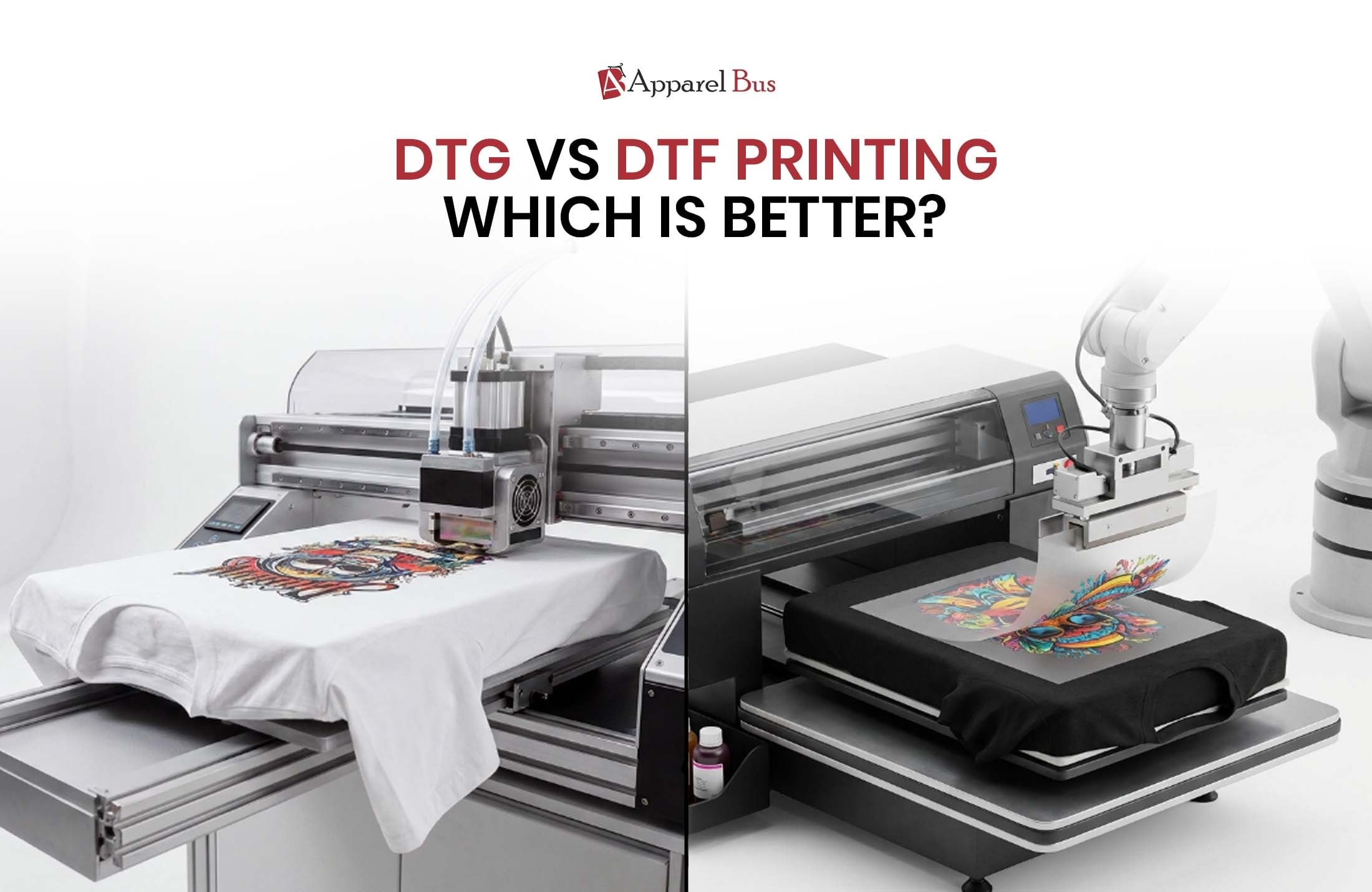
Table of Contents
- DTG vs DTF: Quick Comparison
- What Is DTG Printing?
- How Does DTG Printing Work?
- What Is DTF Printing?
- How Do DTF Transfers Work?
- DTG vs DTF: What Is the Difference?
- DTG vs DTF Durability:
- DTG vs DTF Cost: Which Is Cheaper?
- DTG vs DTF for Wholesale Apparel
- DTG vs DTF for Different Fabrics
- DTG vs DTF for Different Designs
- When Should You Choose DTG Printing?
- When Should You Choose DTF Printing?
- Final Verdict: DTG vs DTF
Share this Media




Published on 23 Sep 2026

By Apparelbus
DTG vs DTF Printing: Which Is Better?
Neither DTG nor DTF wins this comparison outright, but the decision is still straightforward once you know your fabric and priorities. Choose DTG for cotton garments, a soft print feel, premium photo-realistic artwork, and print-on-demand orders. Choose DTF for polyester and blended fabrics, dark garments, mixed-fabric orders, stronger durability across varied materials, and batch production.
For most wholesale orders involving different garment types, DTF is the more flexible option. For premium cotton apparel where print feel matters most, DTG is the better choice. Let’s break down why, covering quality, durability, cost, fabric compatibility, and feel in more detail.
DTG vs DTF: Quick Comparison
| Feature | DTG | DTF |
| Full name | Direct to Garment | Direct to Film |
| Printing process | Ink goes directly onto the garment | Design prints onto film, then transfers to the garment |
| Best fabric | Cotton | Cotton, polyester, blends, and many other fabrics |
| Print feel | Very soft | Smooth with a slightly raised feel |
| Color vibrancy | Excellent | Excellent, especially on dark garments |
| Detail | Excellent | Excellent |
| Durability | Good | Very good to excellent |
| Dark garments | Good | Excellent |
| Small orders | Excellent | Excellent |
| Print on demand | Excellent | Excellent |
| Fabric versatility | Limited | High |
| Best use | Premium cotton apparel | Mixed fabrics, dark garments, and durable prints |
What Is DTG Printing?
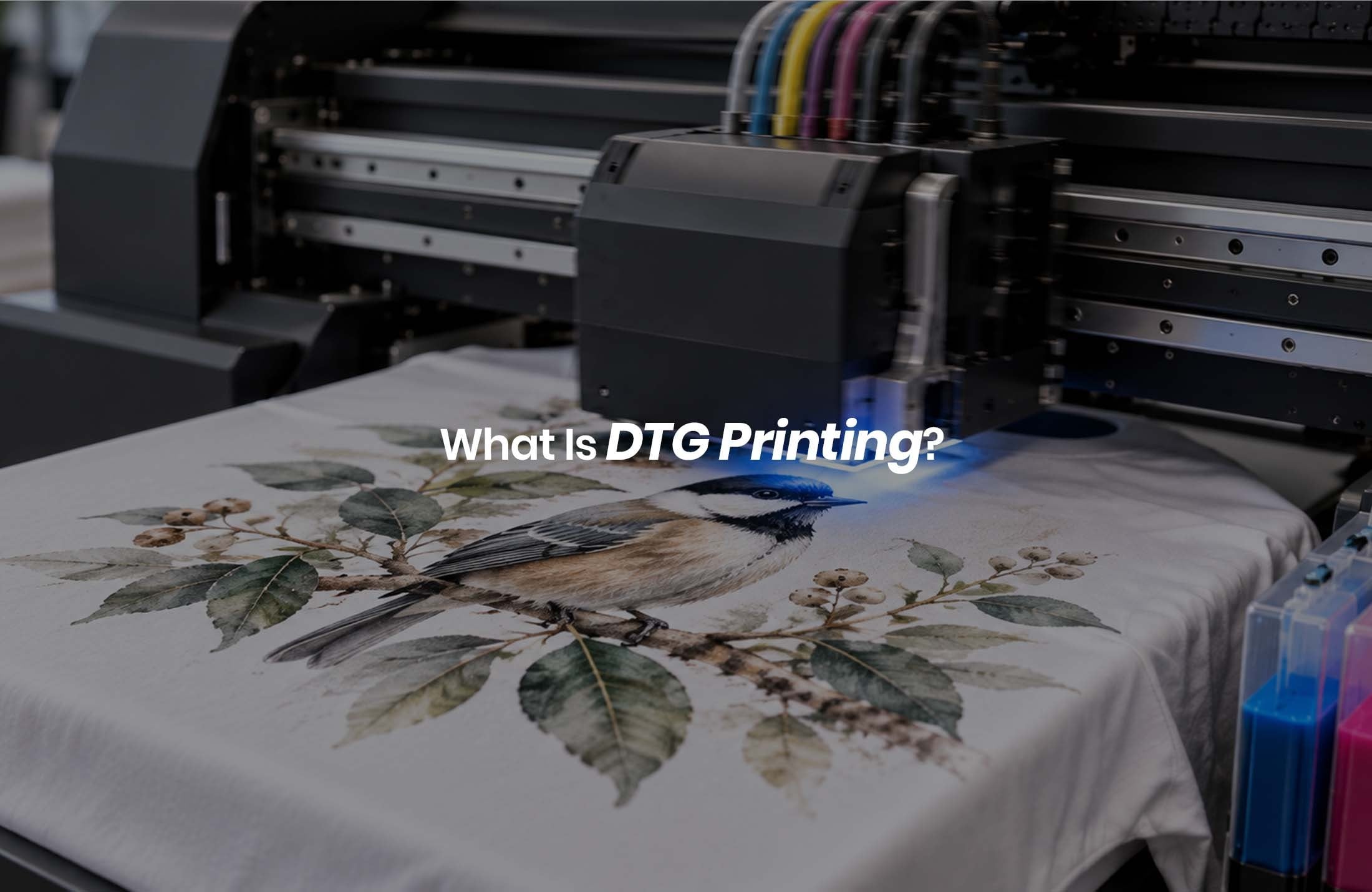
Direct-to-garment printing, or DTG, uses a specialized inkjet printer to apply water-based textile ink straight onto fabric, much like a desktop printer applies ink to paper. The ink absorbs into the fibers instead of sitting on top of them, so the finished print becomes part of the garment rather than a separate layer.
How Does DTG Printing Work?
The process starts with garment preparation, where the shirt gets loaded onto a flat platen and any loose fibers get lifted so the ink can be absorbed evenly. A pretreatment solution goes on next, particularly for dark or 100% cotton garments, because it helps the ink bond and keeps colors bright.
The printer then applies the ink directly to the fabric, building a white underbase first on dark shirts so the colors on top stay vivid. Curing follows, usually under a heat press or conveyor dryer, which sets the ink into the fibers and gives the print its wash durability.
Pros of DTG Printing
- Produces a soft print feel that blends into the fabric instead of sitting on top of it.
- Reproduces photographic detail and smooth color gradients accurately
- Suits one-off orders and print-on-demand apparel because there is no setup cost per design
- Skips the screen setup and film production that other methods require
Cons of DTG Printing
- Best suited to cotton and high-cotton blends rather than synthetic fabrics
- Requires pretreatment, which adds a step and a drying period to the process
- Runs slower than DTF for large production runs because each garment prints individually
- Needs proper curing and gentle garment care to hold up over time
What Is DTF Printing?
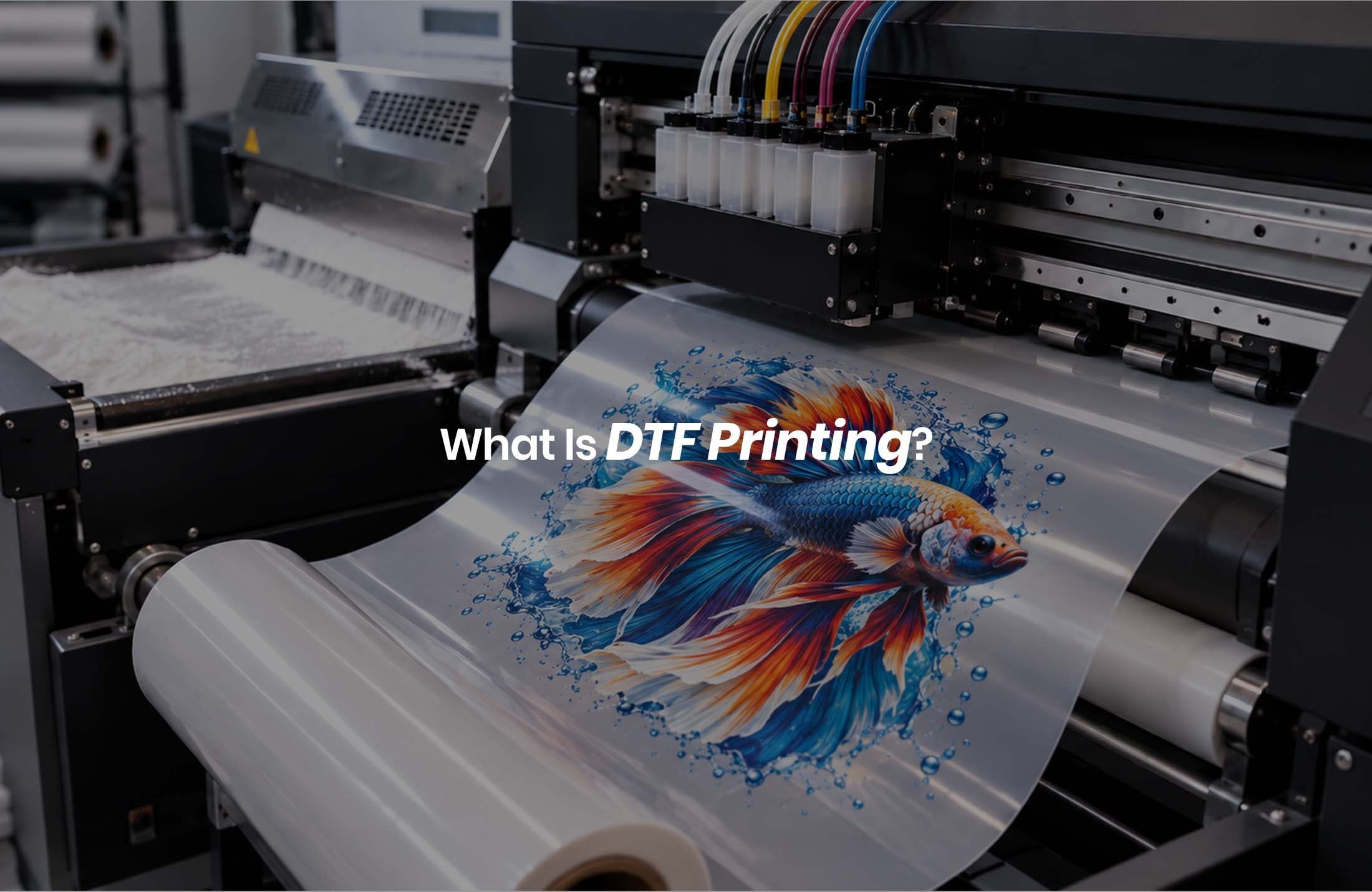
Direct-to-film printing, or DTF, prints a design onto a special PET film first, then transfers that design onto the garment using a heat press. Because the transfer happens after printing, DTF works across a much wider range of fabrics than direct printing methods.
How Do DTF Transfers Work?
Design preparation comes first, since the artwork needs to be mirrored and color-corrected before printing so it looks right once printed. The printer then applies the design onto PET film using CMYK ink, followed by a white ink layer that sits underneath the color layer once the transfer flips onto the garment. That white layer keeps colors opaque and bright even on black or navy fabric.
An adhesive powder is applied over the wet ink and shaken off where it isn't needed; then the film runs through a curing oven or heat press to melt the powder into a bonding layer. Heat pressing applies the transfer to the garment at a set temperature and pressure, and peeling removes the film backing once the transfer has cooled or while it's still warm, depending on the film type. Each step protects the next: skipping proper curing weakens the adhesive bond, and rushing the peel can lift ink before it sets.
Pros of DTF Printing
- Works across cotton, polyester, blends, and many other fabric types
- Produces excellent opacity and contrast on black and navy shirts
- Fits small and medium production runs efficiently
- Allows transfers to be printed in batches ahead of time and applied to garments later
Cons of DTF Printing
- Sits slightly raised on the fabric, so the print feel isn't as soft as DTG
- Requires a heat press for application, which adds to equipment needs
- Depends heavily on correct application settings, since incorrect temperature or pressure can shorten the print's lifespan
DTG vs DTF: What Is the Difference?
The core difference between DTG and DTF comes down to where the ink ends up. DTG applies ink directly into the fabric fibers, while DTF prints the design on film and transfers it onto the garment as a bonded layer. That single difference drives most of the other distinctions between the two methods.
Printing Process
DTG is a direct printing method: ink goes from the printer to the garment in one step. DTF is a transfer method: the design prints onto film first and moves to the garment afterward through heat and pressure.
This is also the main difference between direct-to-garment and heat transfer printing in general, since traditional heat transfer methods rely on a similar two-step transfer process.
Fabric Compatibility
DTG ink is formulated to absorb into natural fibers, so it performs best on cotton and high-cotton blends. DTF's transfer layer bonds to the surface of the fabric rather than depending on absorption, which is why it handles a much wider range of materials, including polyester, blends, and many synthetic fabrics.
Print Feel
DTG produces the softer of the two prints because the ink becomes part of the fabric rather than a layer on it. DTF feels smooth to the touch but has a slightly raised texture where the transfer layer sits on the garment, which some customers notice more on large prints than on small logos.
Print Quality and Detail
Both methods handle photographic images, fine lines, gradients, and small text well, and most customers can't tell the two apart from detail alone. DTG tends to render subtle gradients with a slightly more natural blend since the ink mixes directly on the fabric. DTF holds sharp edges and fine text cleanly because the design prints on a stable film surface before it ever touches the garment.
Color Vibrancy
DTF often looks more vibrant on dark garments because of its dedicated white ink layer and the opacity that the film transfer provides. DTG produces excellent, natural-looking color on light and cotton garments as well.
Dark vs Light Garments
On light cotton shirts, DTG has a clear advantage because the ink absorbs cleanly without needing much of a white base. On dark garments, DTF usually wins because its white ink layer sits beneath the design and blocks the fabric color from showing through, which keeps prints looking bright instead of muted.
DTG vs DTF Durability:
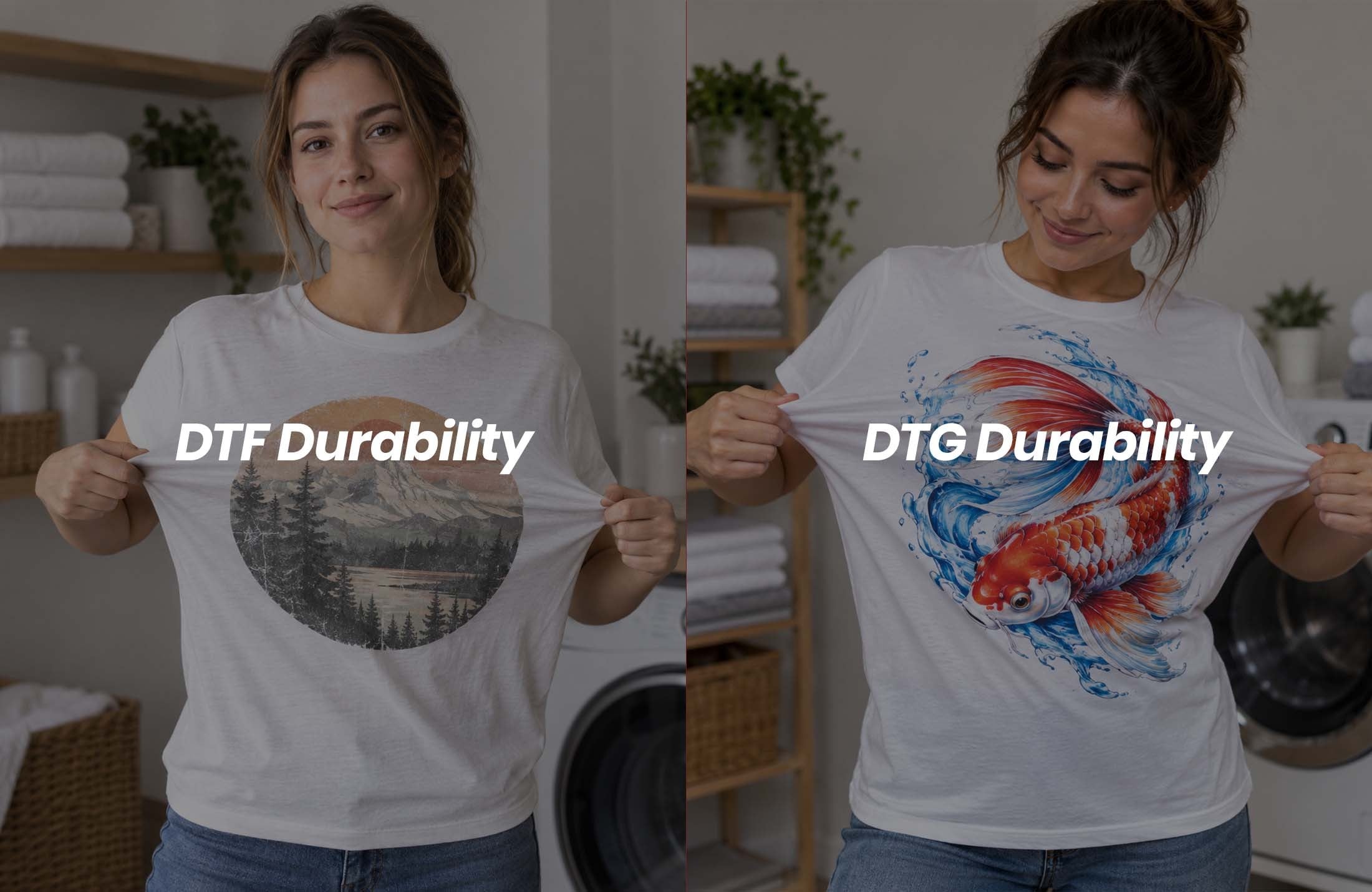
Durability depends on more than the printing method alone. Ink or transfer quality, curing temperature, application settings, the garment's fabric, and how the customer washes and dries the shirt all affect how long a print lasts. No printer can guarantee an exact wash count, but a few factors matter more than any single method choice:
- Print quality and how evenly the ink or adhesive layer is applied
- Correct curing temperature and time
- Correct heat press settings for DTF transfers
- Garment quality, since higher-quality fabric holds prints better
- Washing temperature, since hot water accelerates fading
- Drying method, since air drying preserves prints longer than a hot dryer
How Durable Is DTG?
A properly cured DTG print holds up well over dozens of washes on cotton garments where the ink has fully bonded into the fibers. Fading tends to happen gradually rather than all at once, and dark garments require extra attention during curing since the thicker white underbase needs adequate heat to set completely.
How Durable Is DTF?
DTF prints rely on the adhesive powder layer to bond the transfer to the fabric, and that bond tends to be flexible and resistant to cracking when the transfer is applied at the correct temperature and pressure. Because the layer flexes with the fabric instead of sitting rigidly on top of it, correctly applied DTF prints generally resist cracking and peeling well through repeated washing.
Verdict: DTG vs DTF Durability
DTF often has a durability advantage when correctly applied, particularly across dark and synthetic garments, while a properly cured DTG print can remain highly durable on cotton. The method matters less than the execution: correct curing, correct application settings, and proper wash care decide most of the outcome either way.
DTG vs DTF Cost: Which Is Cheaper?
Neither method is universally cheaper. Unlike screen printing, neither DTG nor DTF requires per-color screen setup, which keeps costs more predictable on small runs. Total cost still depends on garment type and quality, order quantity, print size and number of colors, number of print locations, whether pretreatment is needed, production time, transfer film and adhesive costs for DTF, and the provider's equipment and maintenance costs. Rather than one flat answer, here's how the two methods typically compare across common ordering situations:
| Situation | Usually a better choice |
| One cotton shirt | DTG |
| Small cotton batch | DTG or DTF |
| Mixed-fabric order | DTF |
| Dark polyester garments | DTF |
| Large, repeated orders | DTF |
| Premium cotton with a soft print | DTG |
As order volume grows, DTF often becomes more cost-efficient because transfers can be printed in bulk ahead of time and pressed onto garments quickly, cutting down on labor per piece. DTG production slows on large runs since each shirt prints individually, which can push per-unit costs and turnaround times higher.
On cotton garments specifically, DTG and DTF usually land close together in price, so the decision comes down to feel and durability rather than cost. Pricing also varies by provider and minimum order requirements, so it's worth comparing quotes for cotton versus synthetic orders separately.
DTG vs DTF for Wholesale Apparel
Wholesale buyers weigh this decision differently than someone ordering a single shirt. Production speed, order consistency across garment colors, fabric variety, repeat orders, and cost per garment all factor into which method makes more sense at volume.
Bulk Cotton T-Shirts
For large runs of cotton t-shirts in a single design, DTG delivers the soft feel and detail that premium cotton apparel buyers expect, though turnaround can stretch out as order size grows since each shirt is printed individually.
Mixed-Fabric Apparel
Orders spanning several garment types, such as cotton tees alongside polyester polos, are where DTF's flexibility stands out. One transfer design applies consistently across different fabrics without changing production settings.
Sportswear
Athletic apparel typically uses polyester, spandex, and other synthetic blends, which suit DTF far better than DTG.
Dark Garments
For bulk orders of black or navy apparel, DTF's white ink layer keeps designs opaque and consistent across every unit in the batch.
Print-on-Demand
For wholesale catalogs that support single-unit or small-batch fulfillment, DTG's lack of setup cost per design makes it practical for print-on-demand cotton items, while DTF transfers can be pre-printed in batches and applied as orders come in.
Custom Business Merchandise
Corporate and promotional custom apparel orders often mix garment types, colors, and fabrics in a single purchase order. DTF generally handles that variety more consistently, while DTG remains the stronger pick when the entire order is cotton-based and softness is a priority.
DTG vs DTF for Different Fabrics
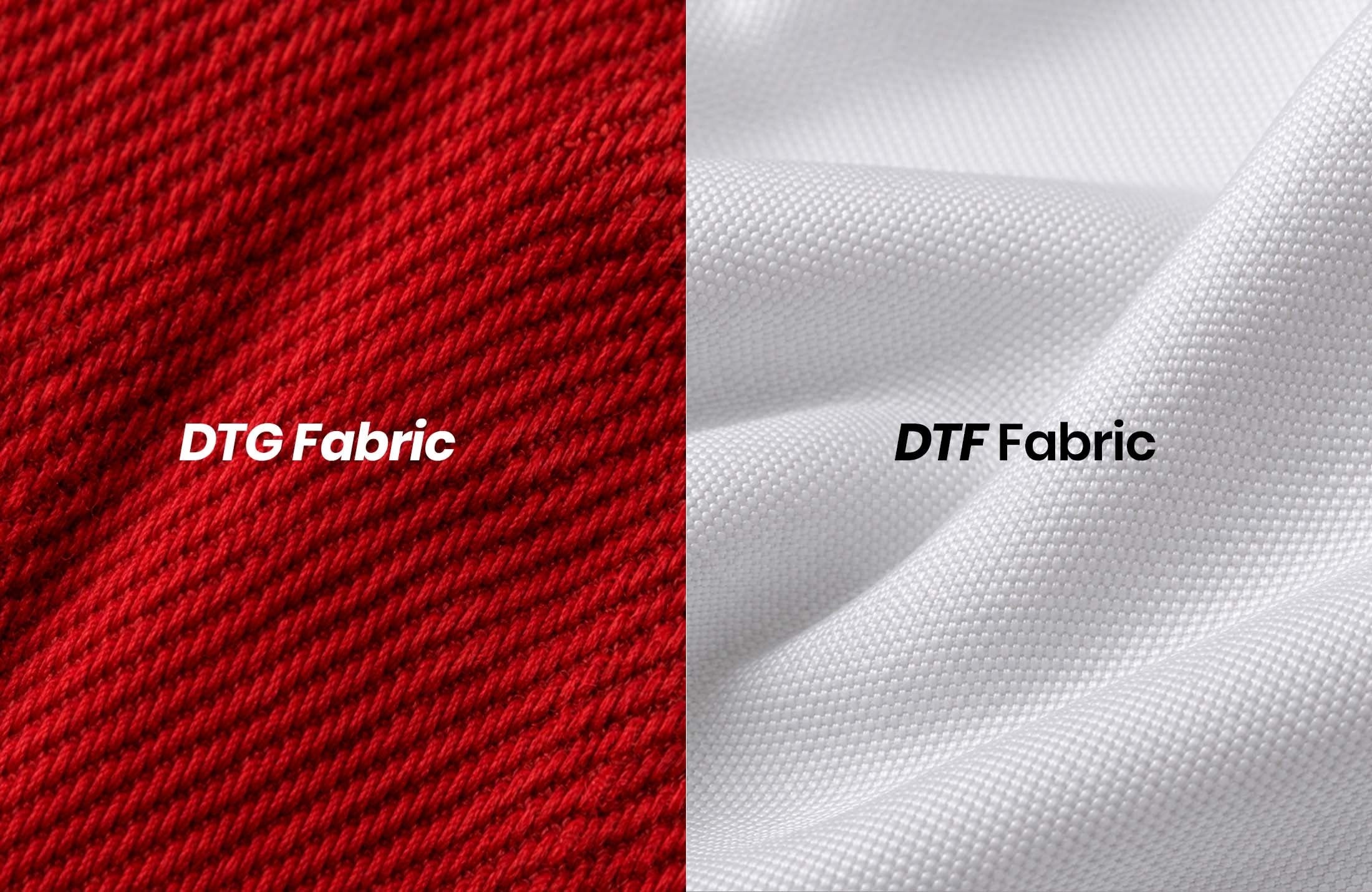
This section covers technical compatibility. Fabric choice plays a bigger role in this decision than most buyers expect.
Cotton
Cotton is where DTG shines, since the fibers absorb ink cleanly, which is part of why it's a popular pick for custom T-shirt orders. DTF also performs well on cotton, so the choice on this fabric usually comes down to preferred feel.
Polyester
Can you use DTG on polyester? It's not the ideal choice. DTG ink is formulated for natural fibers, and 100% polyester resists that absorption, which can lead to weaker adhesion. DTF is generally the better-suited method for polyester garments because the transfer bonds to the surface rather than depending on fiber absorption.
Cotton-Polyester Blends
Blends fall somewhere in between, and results depend on the exact cotton-to-polyester ratio. DTF tends to deliver more consistent results across different blend ratios, while DTG works well on blends with a higher cotton percentage.
Nylon and Synthetic Fabrics
Nylon, spandex, and other synthetic materials common in sportswear generally don't accept DTG ink well. DTF is the practical choice for these fabrics, since the transfer method doesn't rely on fiber absorption.
Dark-Colored Garments
DTF generally produces more opaque, vibrant results on black and navy garments thanks to its dedicated white ink layer. DTG can still achieve strong results on dark cotton shirts with a properly applied white underbase.
Light-Colored Garments
On white and light-colored cotton, DTG often produces the most natural-looking result since the ink absorbs directly into light fabric without needing a heavy white base underneath it.
DTG vs DTF for Different Designs
Design style matters too, though the differences here are smaller than those in fabric and garment color. Four groupings cover most decisions.
Photo and Detailed Artwork
Both methods reproduce photorealistic images and fine detail well. DTG often has a slight edge on cotton because the ink blends smoothly into the fabric, giving photo prints a natural look, while DTF holds fine lines and small details cleanly since the design prints on a stable film surface first.
Logos and Text
Simple logos and small text print sharply with either method. Fabric type, not design complexity, usually decides which method to use here.
Large Graphics
Large solid-color graphics work well with both methods, though DTF's opacity gives large designs extra punch on dark garments where DTG would need a thicker ink layer to match.
Gradients and Complex Artwork
DTG tends to produce smoother gradients on cotton since the ink blends directly into the fibers. DTF gradients look excellent as well, and multi-color artwork suits both methods equally since neither requires separate screens or setup per color the way screen printing does.
When Should You Choose DTG Printing?
- You want the softest possible print feel on the finished garment
- Your order is cotton or high-cotton blend apparel
- You're fulfilling print-on-demand or one-off orders without wasting materials on unused setup
- Your design is a detailed, photo-realistic image on a cotton garment
When Should You Choose DTF Printing?
- Your order includes polyester or synthetic-blend garments
- Color vibrancy on black or navy shirts is the priority
- You're printing athletic or performance fabrics
- The print needs to survive frequent washing across varied fabric types
- Your order spans several garment types and fabrics
- You want to pre-print transfers in batches and apply them as orders come in
Final Verdict: DTG vs DTF
For most wholesale orders involving different garment types, DTF is the more flexible option: it handles polyester and blends, holds up well on dark garments, and supports batch production across mixed orders. For premium wholesale apparel where print feel matters most on cotton, DTG remains the better choice, particularly for print-on-demand and photorealistic designs.
Match the method to your fabric and how the finished product needs to perform, and either one can deliver a print that holds up. If you're weighing other options too, our Embroidery vs Screen Printing comparison breaks down two more methods worth considering, and the Types of Shirt Printing guide covers the full range before you finalize an order.
Share this Media
Leave us a comment