
 +1-442-325-3923




 Live Chat







Your shopping cart is currently empty.
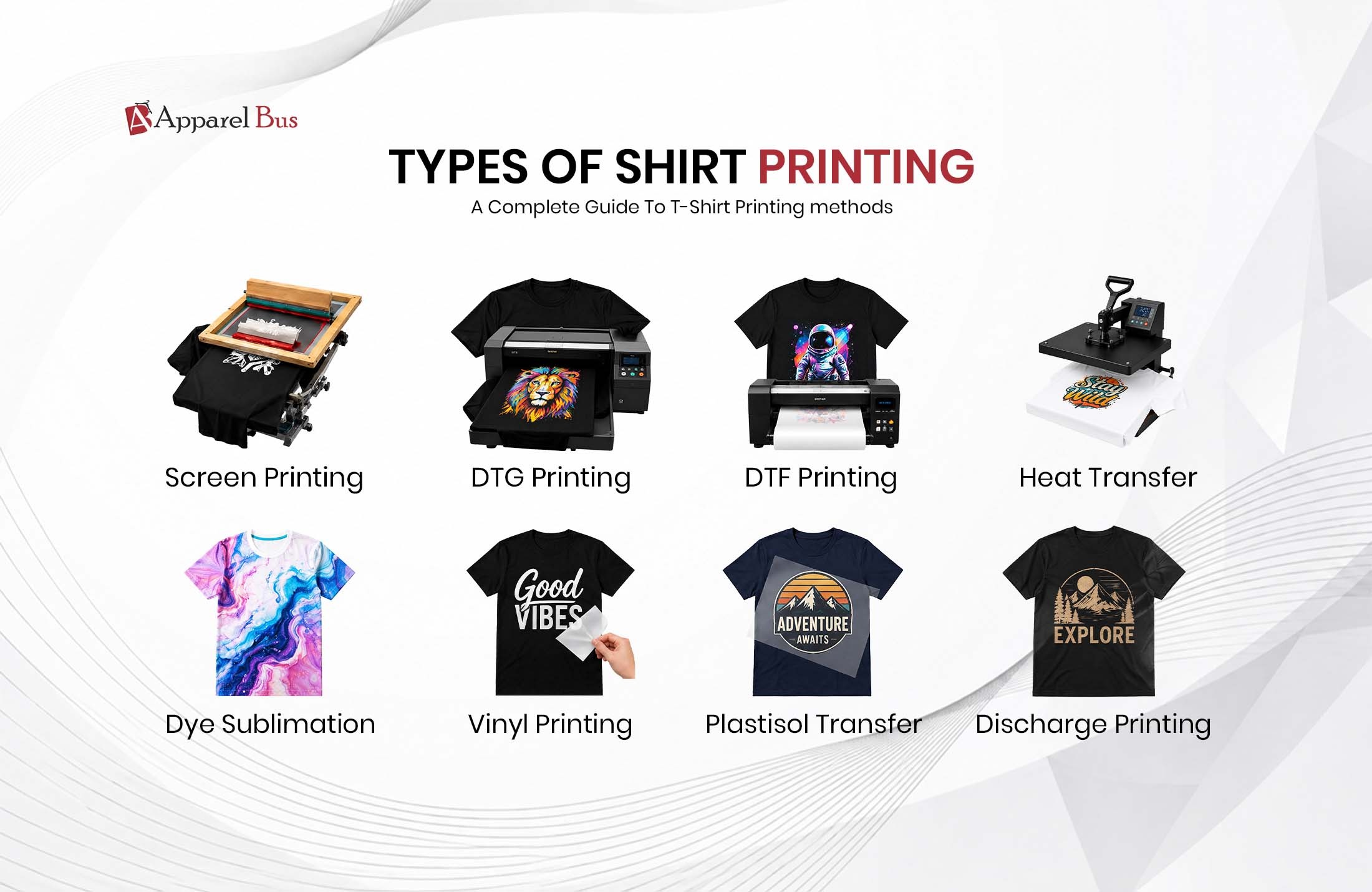
Table of Contents
Share this Media




Published on 17 Aug 2026
Updated on 18 Aug 2026

By Apparelbus
Types of Shirt Printing: A Complete Guide to T-Shirt Printing Methods
You’ve found a design you love, but there’s one important decision left: choosing the right printing method. The wrong choice can make a detailed logo look blurry, increase the cost of a bulk order, or leave you with a print that cracks and fades after a few washes. The right method helps your design look sharp, last longer, and suit the shirt you’re printing.
A printed shirt is simply a garment that carries a design, logo, or piece of artwork applied with ink, dye, vinyl, or a transfer. What changes from method to method is how that design gets onto the fabric, and that difference is what decides how sharp the colors look, how the print feels against the skin, and how long it survives the wash. Fabric type, order quantity, budget, and how long you need the print to last all push the decision in different directions, which is why there is no single best printing method for every shirt.
Let’s walk through the main kinds of shirt printing in use today, compare the leading shirt printing techniques side by side, and explain how to match a method to a real order. Whether you are placing a small custom run or sourcing wholesale apparel for a team, event, or brand, understanding these types of apparel printing makes it much easier to order a custom t-shirt that looks the way you pictured it
T-Shirt Printing Methods At A Glance:
| Printing Method | Best For | Best Fabric | Design Detail | Order Size | Durability | Cost |
| Screen Printing | Bulk team and brand orders | Cotton and cotton blends | Bold, limited-color designs | Large / bulk | Very high | Low per shirt at volume |
| DTG Printing | Detailed, photo-style art | 100% cotton | Full color, photographic | Small orders | Moderate to high | Higher per shirt |
| DTF Printing | Detailed art on mixed fabrics | Cotton, polyester, blends | Full color, fine detail | Small to medium | High | Moderate per shirt |
| Heat Transfe | Custom names and one-off shirts | Cotton, blends, polyester | Simple to full color | Small orders | Moderate | Low setup, higher per shirt |
| Dye Sublimation | All-over, vibrant designs | 100% polyester (white/light) | Full color, all-over | Small to large | High on polyester | Moderate |
| Vinyl Printing | Names, numbers, sportswear | Cotton, polyester, blends | Simple shapes and text | Small orders | High | Low per item, slow at volume |
| Plastisol Transfer | Pre-printed bulk designs | Cotton and blends | Bold, limited-color designs | Small to bulk | Very high | Low per shirt at volume |
| Discharge Printing | Soft, vintage-look prints | 100% dark cotton | Bold, simple designs | Medium to large | High | Moderate |
8 Types of Shirt Printing
Each of the eight methods below works best for a different combination of design, fabric, order size, and budget. Reviewing how each one works makes it much easier to see which fits the shirt you are planning to print.
1. Screen Printing
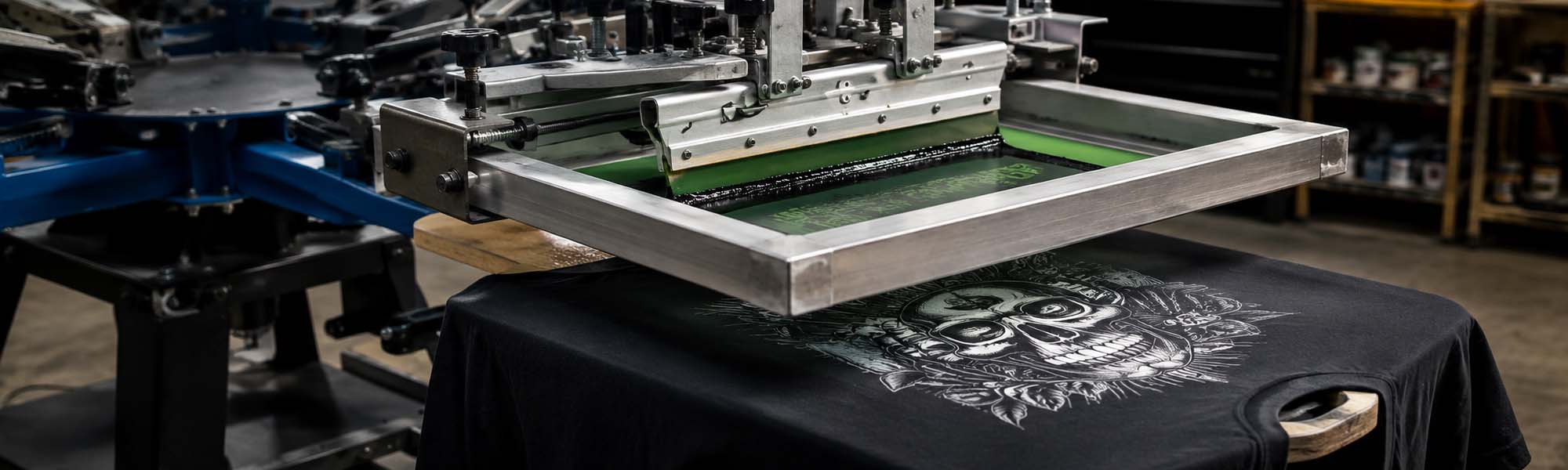
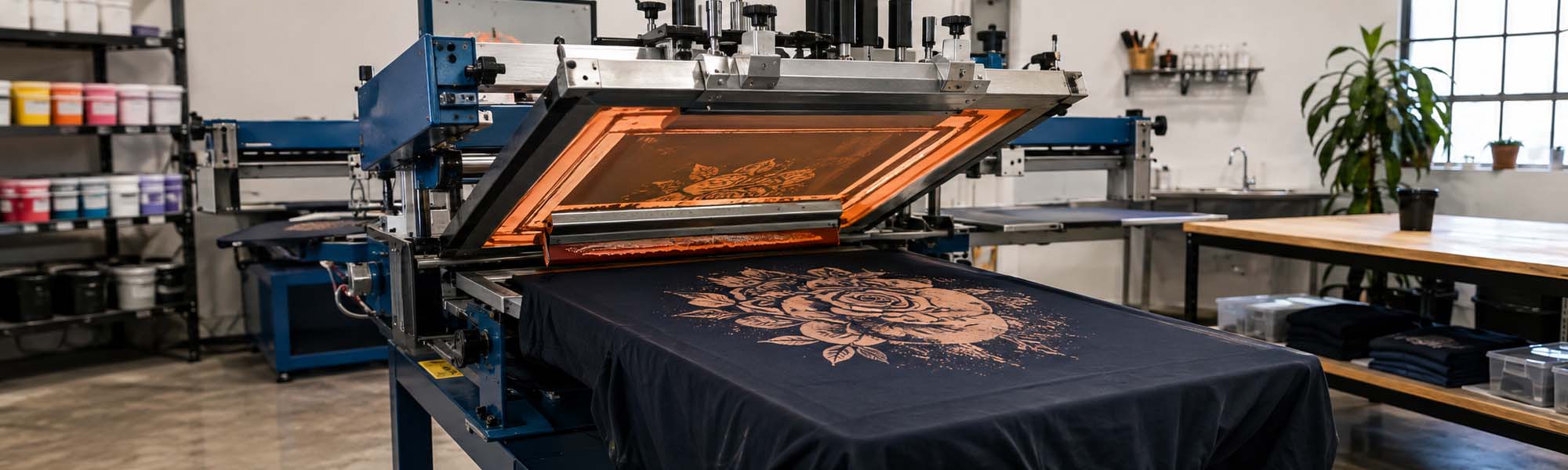
Screen printing pushes ink through a fine mesh screen, one screen per color, directly onto the fabric. Each layer of ink builds up on the shirt and cures under heat, which is why the process is so well suited to screen printing runs that need the same design repeated across many identical garments.
- Best Fabrics: Cotton and cotton blend shirts, which hold the ink well and print with a clean, opaque finish.
- Best Designs: Bold graphics with a limited number of solid colors, such as logos, team names, and simple illustrations.
- Best Order Quantities: Large and bulk orders, since screen setup takes time but each additional shirt after that is fast and inexpensive to print.
- Durability: Very high. The ink sits thick on the fabric and resists cracking or fading through repeated washing.
- Cost: Setup cost per design is higher because each color needs its own screen, but the cost per shirt drops significantly as order size grows.
- Pros: Vivid, long-lasting color, low per-unit cost at volume, and a soft print feel once cured.
- Cons: Not cost-effective for single shirts or highly detailed, multicolor artwork, since every extra color adds another screen.
- Best Use Cases: Team uniforms, branded merchandise, event shirts, and any order where the same design is printed dozens or hundreds of times.
2. Direct-to-Garment (DTG) Printing
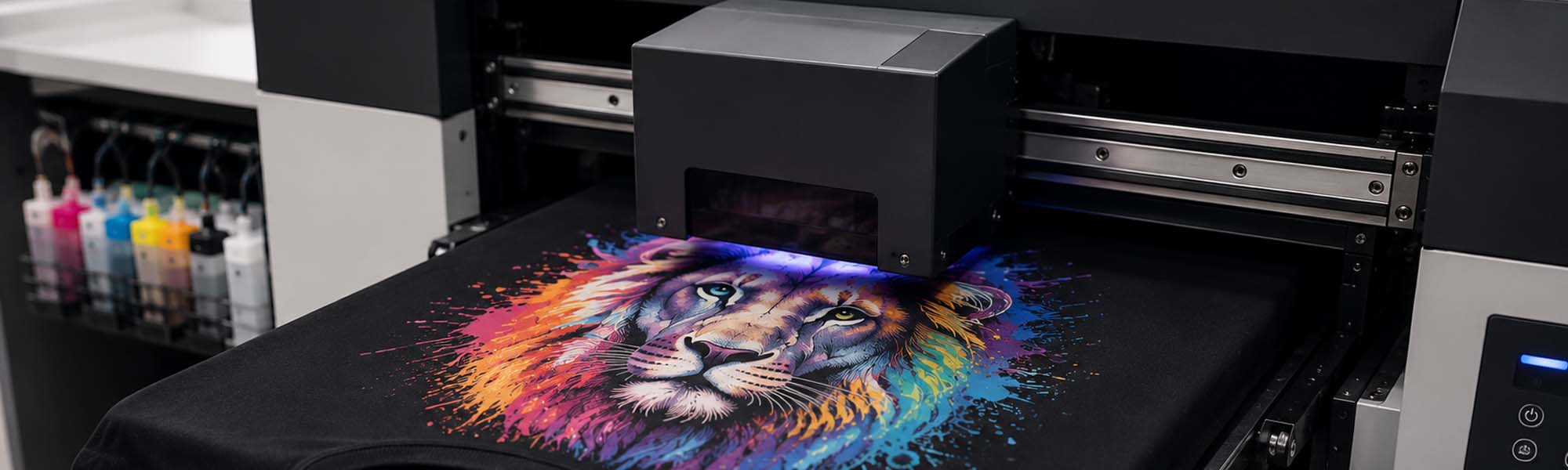
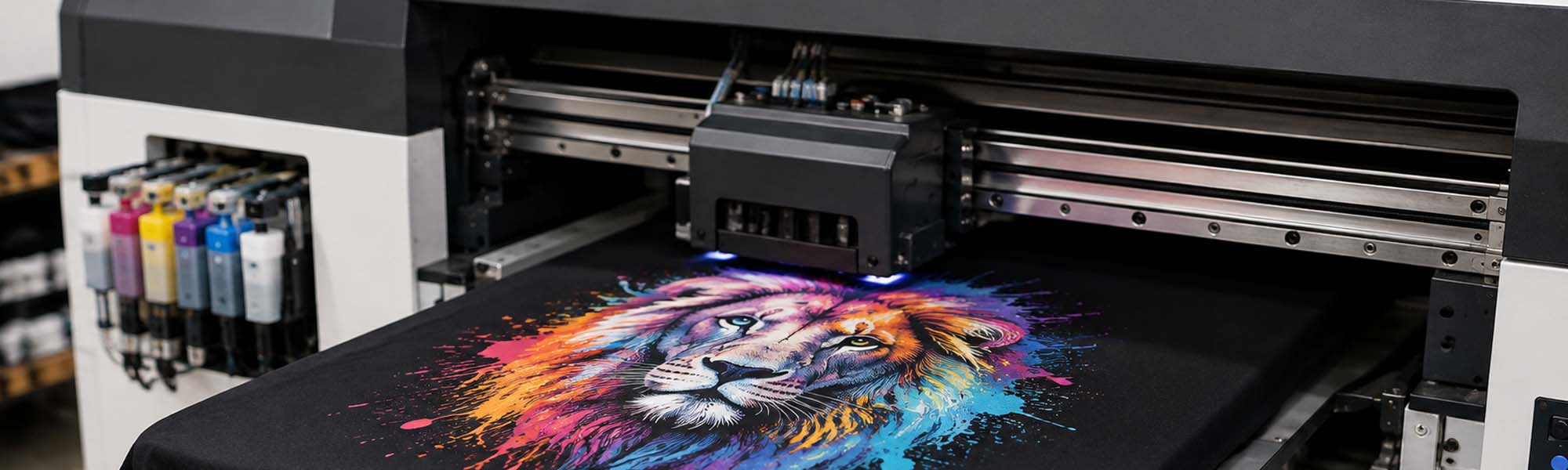
Direct-to-garment printing works like an inkjet printer for fabric. A specialized printer applies water-based ink straight onto the shirt in fine layers, building up full-color detail without needing separate screens for each color. This makes direct-to-garment printing a strong option whenever the design itself is the priority rather than the order size.
- Best Fabrics: 100% cotton performs best, since the ink absorbs cleanly into natural fibers.
- Best For: Detailed and photographic designs, gradients, and artwork with many colors, since there is no per-color setup cost.
- Order Size: Small orders and one-off shirts, including single custom pieces, since there is no minimum quantity requirement.
- Print Feel: Soft and lightweight, since the ink absorbs into the fabric rather than sitting on top of it.
- Durability: Durability can be good with proper pretreatment, curing, and care, although screen printing may hold up better under heavy repeated washing
- Pros: Unlimited colors, no setup cost per design, and a soft hand feel on the finished shirt.
- Cons: Slower per shirt than screen printing and less cost-effective at large order volumes.
3. Direct-to-Film (DTF) Printing
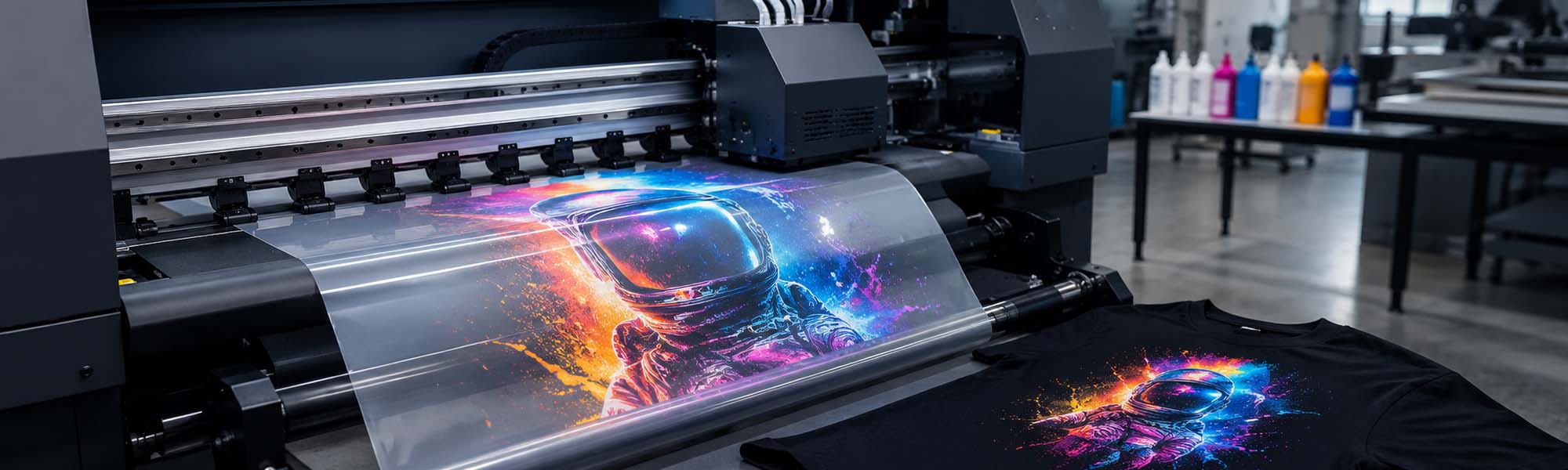
Direct-to-film printing prints a design onto a special film, coats it with adhesive powder, and then heat presses it onto the shirt. Because the design transfers as a finished layer rather than absorbing into the fibers, direct-to-film printing works across a much wider range of fabrics than DTG.
- Fabric Compatibility: Cotton, polyester, blends, and even some synthetic fabrics that DTG struggles with.
- Design Detail: Handles fine detail, gradients, and full-color graphics with strong edge definition.
- Color Performance: Bright, saturated color that holds up well on both light and dark garments.
- Order Size: Small and medium orders, with reasonable per-shirt cost even below screen printing's typical minimums.
- Durability: High, since the transfer sits as a flexible, wash-resistant layer once properly pressed.
- Pros: Works on almost any fabric, prints vividly on dark garments, and scales down to small orders affordably.
- Cons: The print sits slightly on top of the fabric, so it is not as soft to the touch as DTG or sublimation.
4. Heat Transfer Printing
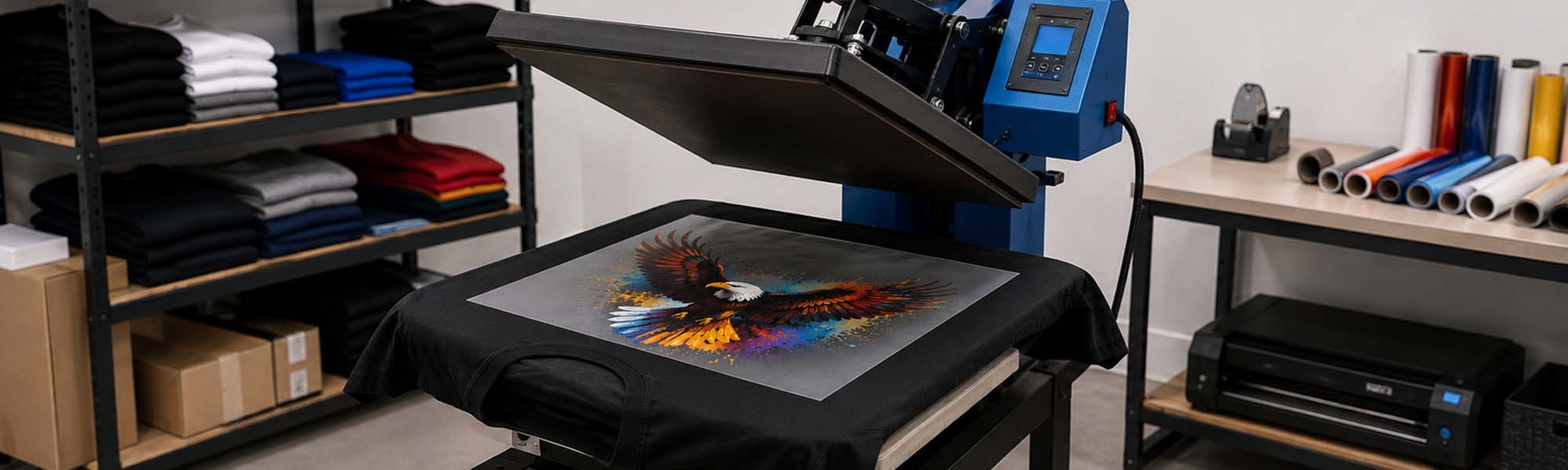
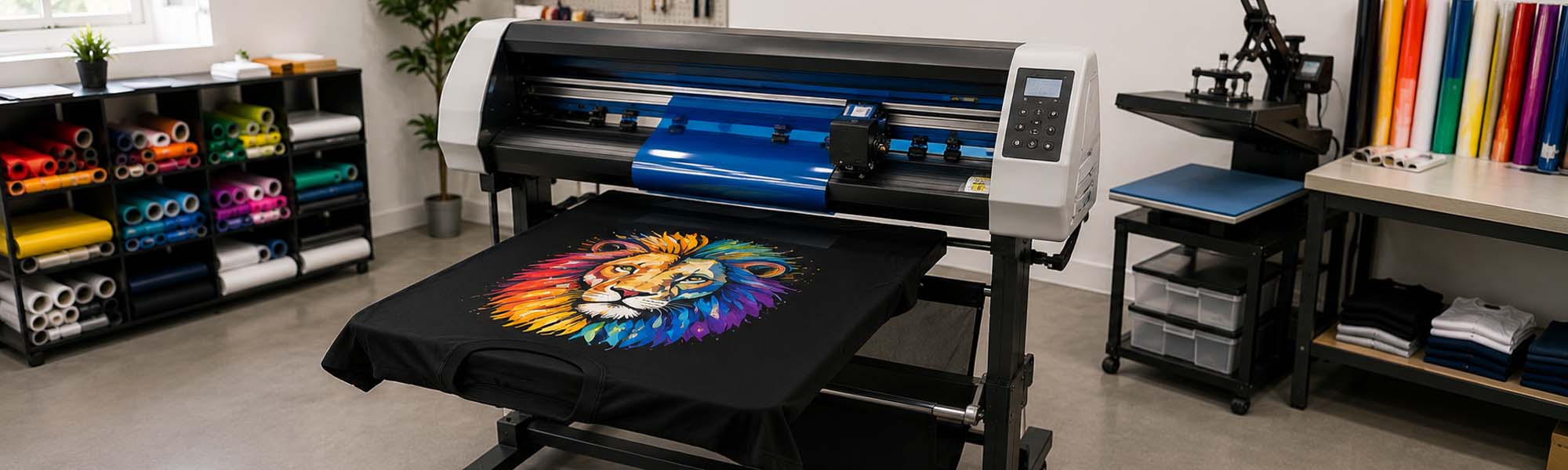
Heat transfer printing applies a design to the shirt using heat and pressure, bonding a pre-made transfer onto the fabric rather than printing directly onto it. Two common forms fall under this category: heat transfer vinyl, which is cut from colored vinyl sheets into shapes and letters, and printed heat transfers, which are printed onto special paper and then pressed onto the garment. Businesses often reach for heat transfer printing when they need a quick turnaround on a small run of custom shirts.
- Best Designs: Simple text, numbers, and single- or few-color graphics work best, especially with vinyl.
- Fabric Compatibility: Cotton, cotton blends, and polyester, depending on the transfer material used.
- Quantity: Best for small runs and personalized single shirts rather than bulk production.
- Cost: Low setup cost, making it accessible for one-off orders, though the per-shirt cost stays relatively constant regardless of quantity.
- Durability: Moderate. Transfers can crack or peel over time, especially with frequent washing or high heat drying.
- Pros: Fast turnaround, no minimum order, and works well for personalized or one-of-a-kind shirts.
- Cons: Less durable long-term than screen printing and can feel stiffer against the skin.
5. Dye Sublimation Printing
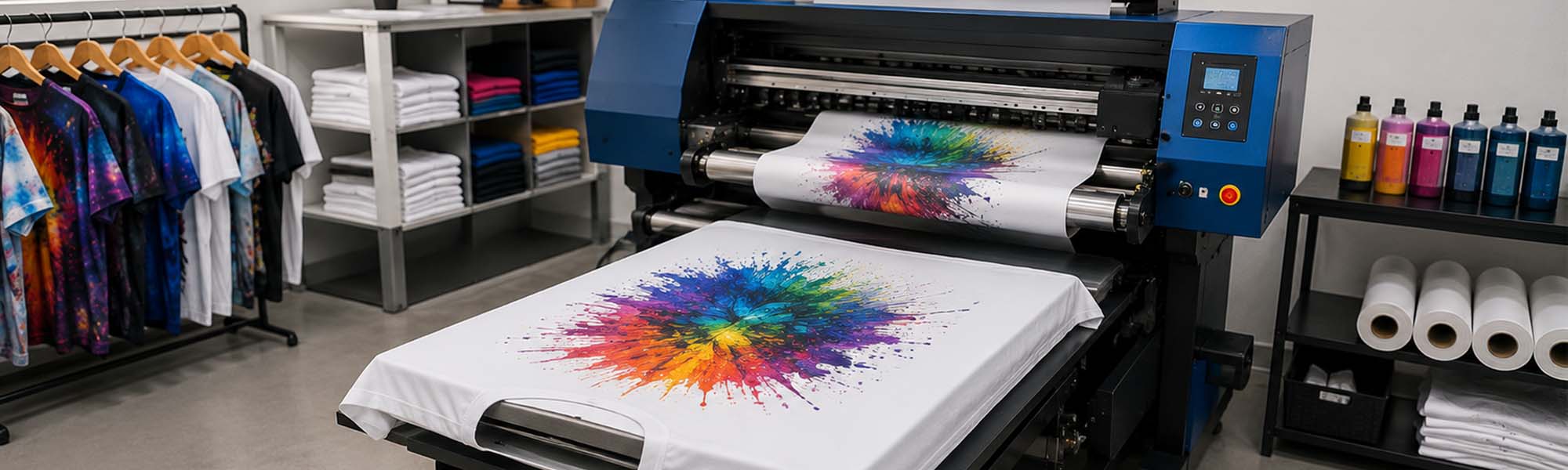
Dye sublimation printing turns dye into a gas under heat, which then bonds directly with the fibers of the fabric rather than sitting on the surface. Because the dye becomes part of the fabric itself, the print has no texture at all, so it has great resistance to cracking, peeling, or fading the way surface prints eventually do.
- Why Polyester Matters: Sublimation only works well on polyester or polyester-coated surfaces, since the dye needs synthetic fibers to bond with. It does not work on 100% cotton.
- Light vs. Dark Garments: Sublimation performs best on white or light-colored shirts, since the dye is transparent and cannot cover dark fabric.
- All-Over Printing: One of the few methods capable of printing edge to edge across an entire garment, including sleeves and side seams.
- Color Vibrancy: Extremely vibrant, photo-quality color with smooth gradients and no visible print texture.
- Durability: Excellent, since the dye becomes part of the fabric and will not crack, peel, or fade from normal washing.
- Best Use Cases: All-over sportswear, performance shirts, and any design that needs to wrap around the entire garment.
- Limitations: Requires polyester or a poly-blend with high polyester content, and does not work on dark or 100% cotton shirts.
6. Vinyl Printing
Vinyl printing cuts a design out of colored vinyl sheets using a plotter, then applies the shape to the shirt with heat and pressure. Because each color is a separate cut layer, this method suits simple shapes far better than detailed, multicolor artwork.
- Best For: Names, numbers, and simple logos, which is why vinyl printing is so common on sportswear jerseys.
- Order Size: Small orders and personalization, such as adding a different name or number to each shirt in a batch.
- Texture: The vinyl sits as a raised, slightly rubbery layer on top of the fabric, giving prints a distinct texture.
- Pros: Sharp, clean edges, strong durability, and an easy way to personalize individual shirts.
- Cons: Not practical for detailed or multicolor designs, and cutting each shape by hand slows production at scale.
7. Plastisol Transfer Printing
Plastisol transfer printing screen prints a design onto special transfer paper first, then heat presses that finished print onto the shirt afterward. The ink itself is the same plastisol used in traditional screen printing, but separating the printing and pressing steps lets a supplier print large batches of transfers in advance and press them onto garments only as orders come in.
- How It Differs From Screen Printing: Traditional screen printing applies ink directly to the shirt, while plastisol transfers are printed on paper first and pressed on later, which allows designs to be pre-printed in bulk and applied on demand.
- Best Designs: Bold graphics with a limited color palette, similar to standard screen printing.
- Small vs. Bulk Orders: Works for both, since pre-printed transfers can be pressed one at a time or across a large batch of shirts.
- Durability: Very high, since the ink itself is identical to traditional screen printing ink.
- Pros: Combines screen printing's color quality with the flexibility to apply designs later or in smaller batches.
- Cons: The transfer can leave a faint outline or slight texture around the design edges.
8. Discharge Printing
Discharge printing removes the existing dye from a dark cotton shirt in the printed area and replaces it with a new color at the same time. Rather than sitting on top of the fabric like most inks, discharge ink reacts with the garment's dye, which is why the finished print feels soft and almost invisible to the touch.
- Best Fabrics: 100% cotton, particularly dark or richly dyed shirts, since the process needs dye to react with.
- Look and Feel: Produces a soft, vintage, worn-in appearance with no raised texture.
- Best Garments: Dark cotton shirts, where the contrast between the discharged design and the surrounding fabric color is most visible.
- Best Designs: Simple, bold designs that benefit from a faded, vintage aesthetic.
- Advantages: Extremely soft hand feel, a distinctive vintage look, and excellent breathability since nothing sits on the fabric surface.
- Limitations: Only works reliably on 100% cotton and cannot achieve bright, saturated color the way screen printing or DTF can.
How to Choose the Best T-Shirt Printing Method
Rather than settling for "it depends," it helps to walk through the five factors that actually drive the decision.
Choose Based on Order Quantity
Small orders, from a single shirt up to a few dozen, generally favor DTG, DTF, or heat transfer, since none of them require an expensive setup step. Medium orders often shift toward DTF or vinyl, which balance setup effort against per-shirt cost reasonably well. Large or bulk orders almost always favor screen printing or plastisol transfers, since their higher setup cost gets spread across hundreds or thousands of shirts.
Choose Based on Design Complexity
Simple logos and text print well with screen printing, vinyl, or plastisol transfers, all of which handle bold, limited-color artwork efficiently. Multi-color graphics and photographic designs need DTG, DTF, or sublimation, since these methods print unlimited colors without adding extra setup steps. Detailed artwork with gradients or fine shading performs best with DTF or sublimation, both of which reproduce fine detail accurately.
Choose Based on Fabric
Cotton shirts work well with almost every method on this list, including screen printing, DTG, discharge printing, and heat transfer. Polyester shirts need sublimation for the best result, since sublimation dye bonds only with synthetic fibers. Cotton blends generally handle DTF, vinyl, and heat transfer well, while other synthetic fabrics usually perform best with DTF, since it adheres to a wider range of materials than DTG or discharge printing.
Choose Based on Durability
Screen printing, plastisol transfers, and sublimation offer the longest-lasting prints, since the ink either sits thick on the fabric or becomes part of it. DTG and DTF hold up well under normal care but can fade faster than screen printing under heavy, frequent washing. Heat transfer and vinyl are durable for moderate use but are more prone to cracking or peeling over years of wear than the other methods.
Choose Based on Budget
Setup costs and per-shirt costs move in opposite directions across these methods. Screen printing and plastisol transfers carry higher upfront setup costs but the lowest per-shirt cost at volume, which makes them the most economical choice for large orders. DTG, DTF, and heat transfer have little to no setup cost, which keeps small orders affordable, but their per-shirt cost stays higher and does not drop much as quantity increases.
Which T-Shirt Printing Method Is Best for Different Needs?
Best Printing Method for Bulk T-Shirts
Screen printing is the standard choice for bulk T-shirt orders, since its low per-shirt cost at high volume outweighs the initial setup cost.
Best Printing Method for Small Orders
DTG and DTF both work well for small orders and single custom shirts, since neither requires a minimum quantity to be cost-effective.
Best Printing Method for Detailed Designs
DTF and sublimation handle detailed, multicolor, and photographic designs most accurately, reproducing fine shading and gradients that screen printing cannot.
Best Printing Method for Cotton Shirts
Cotton shirts work with nearly every method, but screen printing and DTG both produce excellent, long-lasting results on cotton specifically.
Best Printing Method for Polyester Shirts
Dye sublimation is the clear choice for polyester shirts, since the dye bonds directly with synthetic fibers and produces vivid, permanent color.
Best Printing Method for Long-Lasting Prints
Screen printing, plastisol transfers, and sublimation all offer the highest durability, holding up to years of regular washing without cracking or fading.
Best Printing Method for Personalized Shirts
Heat transfer vinyl and DTG both suit personalized shirts and graphic tees well, since each shirt in an order can carry a unique name, number, or design without added setup cost.
Frequently Asked Questions
Neither is universally better. DTG produces a softer print and works best on 100% cotton, while DTF works across more fabric types and handles vivid color on dark garments more easily.
Dye sublimation and screen printing are generally the longest-lasting methods, since the ink either becomes part of the fabric or sits thick enough to resist cracking and fading.
DTF performs well on both, which is one of its main advantages over DTG and sublimation, neither of which handles both fabric types equally well.
DTF pricing depends on design size, number of colors, and order quantity, so cost varies by order rather than following a single fixed rate.
Screen printing, DTG, DTF, and heat transfer are the most widely used methods, covering the majority of both bulk and small custom orders.
DTF and sublimation both reproduce fine detail, gradients, and photographic artwork more accurately than screen printing or vinyl.
Sublimation dye bonds into the fibers of polyester fabric and leaves no texture, while screen printing applies ink on top of the fabric surface and works across cotton and cotton blends.
Share this Media
Leave us a comment