
 +1-442-325-3923




 Live Chat







Your shopping cart is currently empty.
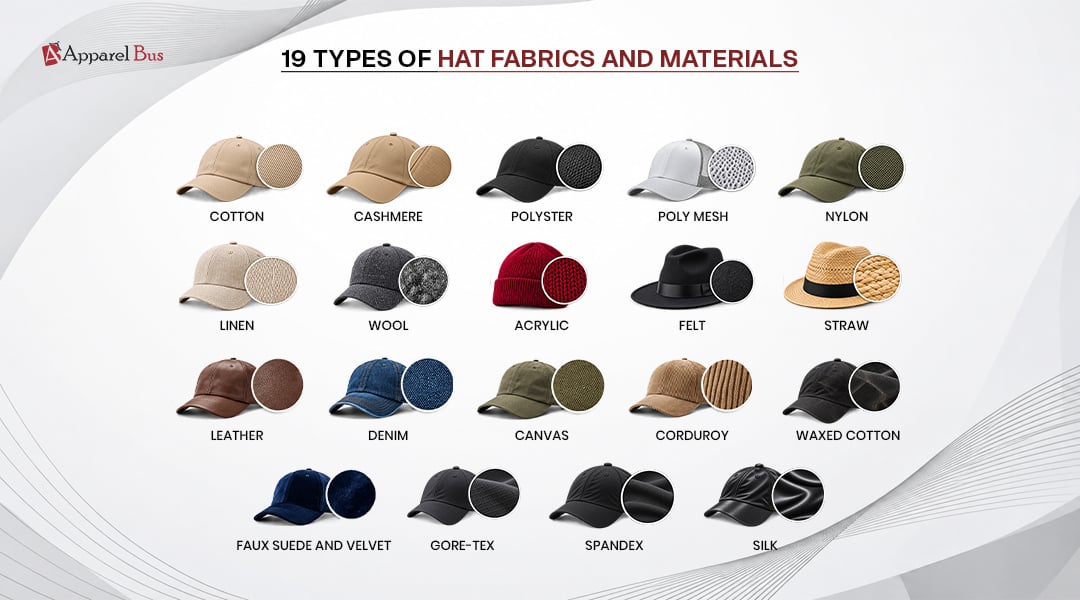
Table of Contents
- A Quick Snapshot of Hat Fabrics
- Natural Types of Hat Fabrics
- 1. Cotton
- 2. Canvas
- 3. Denim
- 4. Corduroy
- 5. Linen
- 6. Wool
- 7. Cashmere
- 8. Felt
- 9. Straw
- 10. Leather and Suede
- 11. Silk
- Synthetic and Performance Hat Fabrics
- 12. Polyester
- 13. Poly Mesh
- 14. Nylon
- 15. Acrylic
- 16. Spandex Blends
- 17. Faux Suede and Velvet
- Weather Resistant Hat Fabrics
- 18. Waxed Cotton
- 19. Gore-Tex
- Best Fabric for Each Hat Type
- Best Hat Fabric for Every Season and Climate
- Choosing the Right Hat Fabric
Share this Media




Published on 02 Nov 2026

By Apparelbus
19 Types of Hat Fabrics and Materials
Every hat starts with a fabric choice, and the different types of hat fabrics decide how a hat looks, feels, breathes, and lasts. A cotton cap feels soft on a warm afternoon. A wool felt fedora keeps its shape through a cold, wet season. A mesh trucker hat lets air move when the sun gets strong.
So, what are hats made of? Most hats use cotton, polyester, wool, felt, straw, or leather. Many modern caps blend two or three fibers, such as cotton and polyester, because blends balance comfort, strength, and price. The best hat fabric for you depends on the weather, the hat style, and how you plan to wear or decorate it.
A Quick Snapshot of Hat Fabrics
| Fabric | Breathability | Warmth | Durability | Best For |
| Cotton | High | Low | Medium | Everyday caps, dad hats |
| Cotton twill | Medium | Low | High | Structured baseball caps |
| Polyester | Medium | Low | High | Sports, team and promo caps |
| Poly mesh | Very high | Very Low | Medium | Trucker hat back panels |
| Nylon | Low | Low | Very high | Rain hats, outdoor and bucket hats |
| Linen | Very high | Very low | Medium | Summer caps and flat caps |
| Wool | Medium | High | High | Beanies, flat caps, winter caps |
| Acrylic | Low | High | Medium | Budget beanies and knit caps |
| Felt | Medium | High | Very high | Fedoras and cowboy hats |
| Straw | Very high | Very low | Low to medium | Sun hats and Panama hats |
| Leather | Low | Medium | Very high | Cowboy, outback and flat caps |
| Denim | Medium | Low | High | Casual caps and bucket hats |
| Canvas | Medium | Low | Very high | Work caps and rugged styles |
Natural Types of Hat Fabrics
Natural fabrics come from plants or animals. They usually breathe well and feel comfortable against the skin, but they often need more care than synthetic fabrics.
1. Cotton
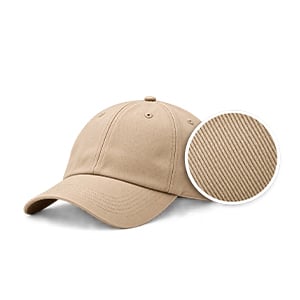
Cotton ranks among the most common hat fabrics in the world. The fiber grows as a fluffy boll around the seeds of the cotton plant, and mills spin it into yarn before they weave it into cloth. Its gentle feel rarely irritates sensitive skin, so parents often pick cotton for kids' hats.
Hat makers use cotton in a few different forms:
- Cotton twill has a tight weave with fine diagonal ribs. It holds structure and takes embroidery cleanly, which is why most classic baseball caps use it.
- Brushed cotton is twill that mills brush to raise a soft surface. It feels smoother and gives caps a premium touch.
- Washed or chino cotton is lighter and softer. It gives dad hats their relaxed, broken-in look.
The Yupoong 6245CM is a good example of a classic cotton cap. It uses 100% cotton chino twill for a soft, unstructured fit. Our Dad Hat vs. Snapback guide explains how this relaxed style compares with a structured cap.
- Best for: baseball caps, dad hats, bucket hats, and sun hats.
- Pros: breathable, absorbs sweat, affordable, and easy to decorate.
- Cons: shrinks with heat, wrinkles easily, and can fade after long sun exposure.
2. Canvas
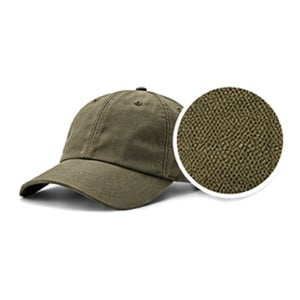
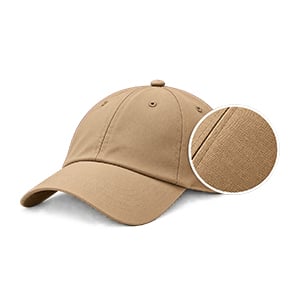
Canvas is a heavy, tightly woven cloth. Sailmakers and tent makers once wove it from hemp, and today most canvas uses heavy cotton. That same toughness makes it a favorite for work caps. A new canvas cap feels stiff, but the fabric breaks in and gains character with wear.
- Best for: work caps, rugged snapbacks, and bucket hats.
- Pros: resists scuffs and tears, and it holds its structure for years.
- Cons: heavier and warmer than light cotton.
3. Denim
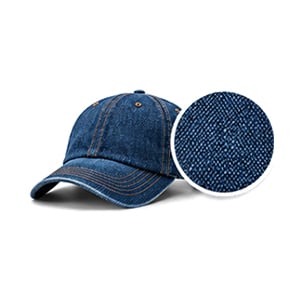
Denim is a sturdy cotton twill with a classic two-tone look. Mills dye the lengthwise threads, usually with indigo, and leave the crosswise threads white. A denim cap feels stiff at first and softens with every wear, much like a good pair of jeans.
- Best for: casual baseball caps, bucket hats, and retro styles.
- Pros: durable, timeless, and easy to care for.
- Cons: the indigo dye can bleed in the wash and fade over time.
4. Corduroy
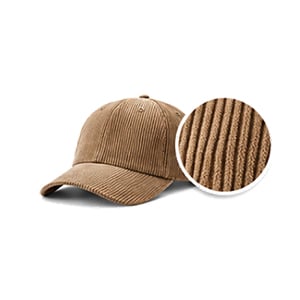
Corduroy is a cotton fabric with raised ribs called wales. Those ribs trap a little air and give caps a vintage, textured look. Wide wales feel chunky and casual, while fine wales look neater.
- Best for: dad hats, fall caps, and retro snapbacks.
- Pros: warmer than plain cotton and pleasant to touch.
- Cons: the ribs can wear flat, and tiny embroidery details can sink between them.
5. Linen
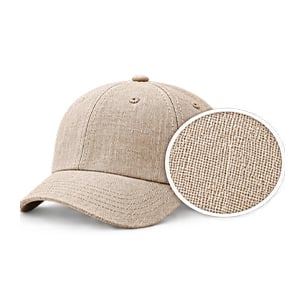
Linen comes from the stalks of the flax plant. People have worn it since ancient Egypt, and it still ranks among the coolest fabrics for hot days. Linen wrinkles easily, but many people enjoy the relaxed look those creases create.
- Best for: summer flat caps, newsboy caps, and sun hats.
- Pros: breathes better than cotton, dries quickly, and feels light.
- Cons: costs more than cotton and holds less structure.
6. Wool
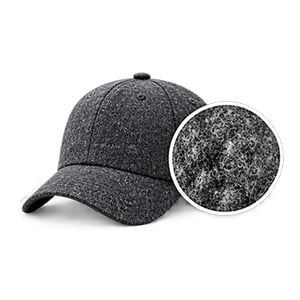
Most wool comes from sheep, though alpacas, goats, and other animals produce specialty wools too. The natural crimp in each fiber traps warm air close to your head. Fine merino wool feels much softer than standard wool, so many premium winter caps use it.
Tweed is a rough, woven wool fabric with a rustic look. Harris Tweed comes only from the Outer Hebrides of Scotland, and Donegal tweed comes from Ireland. Both make classic flat caps and newsboy caps.
- Best for: beanies, flat caps, berets, and winter baseball caps.
- Pros: warm, breathable, odor-resistant, and slow to wrinkle.
- Cons: coarse grades can itch, it shrinks in hot water, and it costs more than acrylic.
7. Cashmere
Cashmere is the fine undercoat that cashmere goats grow to survive harsh winters in Mongolia, China, and other parts of Central Asia. Each goat yields only a small amount of fiber per year, which explains the high price.
- Best for: luxury beanies and gift-quality dress caps.
- Pros: softer and lighter than sheep's wool, with great warmth and no bulk.
- Cons: expensive, delicate, and prone to pilling.
8. Felt
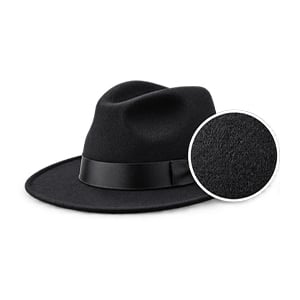
Felt is not woven at all. Hat makers press animal fibers together with heat, moisture, and pressure until they lock into a dense sheet. They then steam the felt and shape it over a wooden block, which lets them form crisp creases and curved brims.
Felt comes in three main grades:
| Felt Type | Made From | Feel | Water Resistance | Price |
| Wool felt | Sheep wool | Firm, slightly coarse | Fair | Low |
| Fur felt | Rabbit or hare fur |
Smooth and velvety |
Good | Medium to high |
| Beaver felt | Beaver underfur | Dense and silky | Excellent | Highest |
Many cowboy hat brands use an "X" rating, such as 10X or 100X, to show felt quality. A higher number usually means more fur and a finer felt. Each brand sets its own scale, though, so a 20X hat from one maker may not match a 20X hat from another.
- Best for: fedoras, cowboy hats, bowlers, trilbies, and top hats.
- Pros: keeps a sharp shape for years and retains heat.
- Cons: too warm for summer and needs regular brushing.
9. Straw
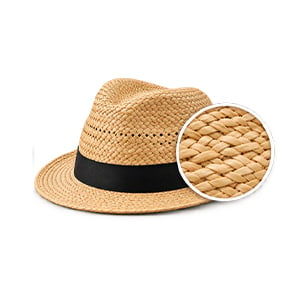
Straw hats use dried plant fibers that makers braid or weave into an open texture. Air moves through the gaps, which makes straw the top choice for sunny days. The word "straw" covers many different fibers, though, and quality varies a lot.
| Straw Type | Source | What to Know |
| Toquilla (Panamá) | Leaves of the palm-like toquilla plant, hand-woven in Ecuador | Light and flexible. The finest Montecristi weaves can take months to finish. |
| Milan | Fine straw braids sewn together in a spiral | Smooth and refined. A favorite for dress fedoras. |
| Raffia | Leaves of the raffia palm | Soft and packable. Many raffia hats survive light crushing. |
| Shantung | Treated and coated paper fiber | Stiff and affordable. Common in western straw hats. |
| Paper straw | Twisted paper yarn | Very light and cheap, but the weakest choice in rain. |
Here is a fun fact: Panama hats come from Ecuador, not Panama. They got the name because traders shipped them through Panama and workers on the Panama Canal wore them.
- Best for: sun hats, Panama hats, boaters, western hats, and beach hats.
- Pros: very light, and a wide brim gives generous shade.
- Cons: water can warp most straw hats, and pinching the crown can crack the weave.
10. Leather and Suede
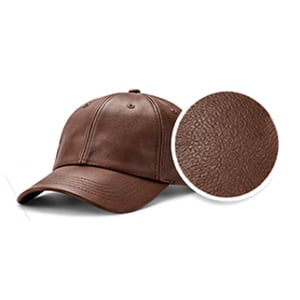
Leather is tanned animal hide, mostly from cows, goats, and sheep. Over time, it develops a patina, a richer and darker color that gives every hat its own character. Australian outback hats often use kangaroo leather because it is light for its strength.
Suede comes from the inner side of the hide, which tanners buff into a soft nap. It looks more casual than smooth leather, but it stains easily and dislikes water.
- Best for: cowboy hats, outback hats, aviator hats, flat caps, and leather patches on caps.
- Pros: lasts for decades, blocks wind and sheds light rain.
- Cons: heavy, hot in summer, costly, and in need of regular conditioning.
11. Silk
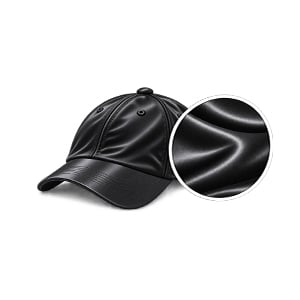
Silkworms spin silk when they build their cocoons. Hat makers prize its natural sheen and smooth hand, and silk also shaped the history of the top hat, which we cover in the FAQ section.
- Best for: hat linings, hat bands, and light summer caps.
- Pros: very light and gentle on the skin.
- Cons: snags easily, fades in direct sun, and needs careful handling.
Synthetic and Performance Hat Fabrics
Synthetic fabrics come from plastics and other man-made polymers. Most sports caps, promo caps, and trucker hats use at least one of them.
12. Polyester
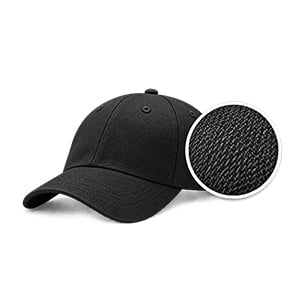
Polyester is the workhorse of modern caps. Performance polyester knits pull sweat away from your skin, so athletes and outdoor workers love them. Plain woven polyester breathes less than cotton, so look for mesh panels, vents, or a performance knit if you live somewhere hot. Many brands now offer recycled polyester made from plastic bottles too.
- Best for: sports caps, team hats, promo caps, and performance caps.
- Pros: resists shrinking and wrinkles, keeps bright colors, dries fast, and costs little.
- Cons: can feel slick and builds static in dry air.
13. Poly Mesh
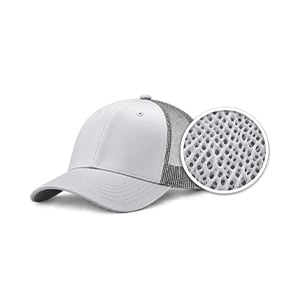
Poly mesh is an open, net-style polyester fabric. Hat makers use it on the back panels of trucker hats so air can flow freely. The Richardson 112, one of the most popular blank trucker hats, pairs a front of 60% cotton and 40% polyester with a 100% polyester mesh back. The solid front gives you a clean surface for a logo.
- Best for: trucker hats, summer caps, and outdoor work caps.
- Pros: maximum airflow, very light, and low cost.
- Cons: offers no warmth, lets more sun reach the scalp, and cannot hold detailed embroidery.
14. Nylon
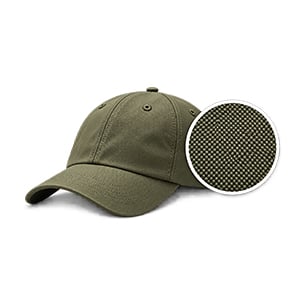
Nylon is a strong, smooth synthetic fiber. It packs down small and often gets a water-repellent coating, so it suits rain hats, hiking hats, and packable bucket hats. Nylon traps more heat than cotton, which is why good outdoor nylon hats add mesh vents.
- Best for: bucket hats, boonie hats, rain hats, and running caps.
- Pros: resists tearing, weighs very little, and wipes clean in seconds.
- Cons: can look shiny and feels less natural than cotton.
15. Acrylic
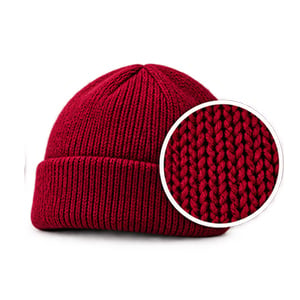
Acrylic is a synthetic fiber that copies the look and warmth of wool at a lower price. Most low-cost beanies use it. A wool and acrylic blend gives you some of the comfort of wool with the easy care of acrylic, and many classic snapbacks use this mix.
- Best for: beanies, knit caps, and wool-style snapbacks.
- Pros: warm, colorful, itch-free, and usually machine washable.
- Cons: breathes less than wool and pills over time.
16. Spandex Blends
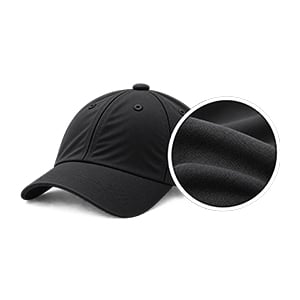
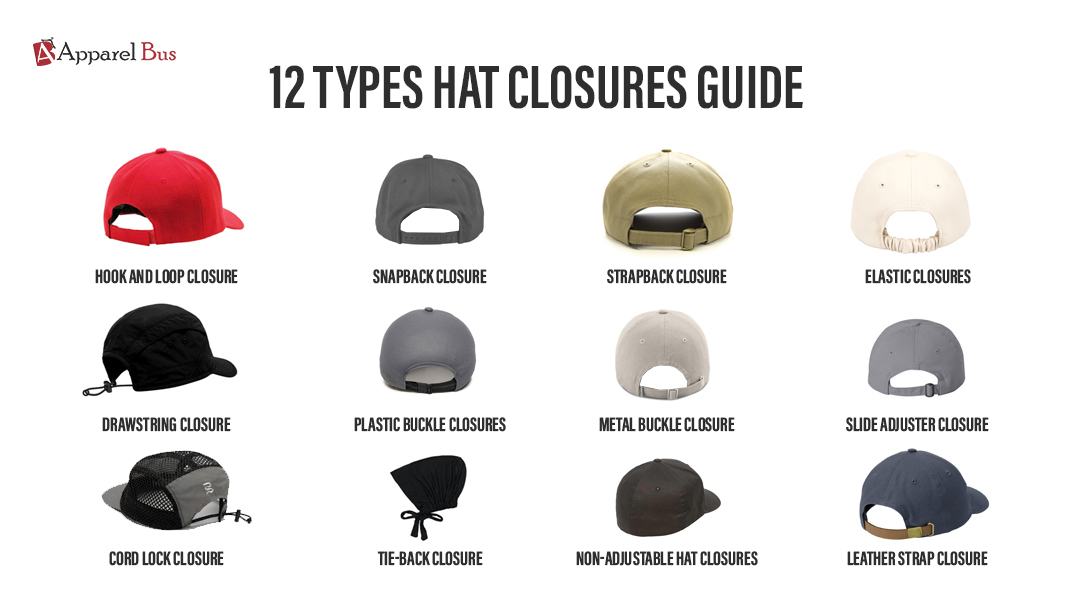
Spandex, also called elastane, is a very stretchy fiber. Hat makers blend a small amount into twill so the cap stretches to fit your head. The Flexfit 6277 is the best-known example. Its fabric blends 63% polyester, 34% cotton, and 3% spandex, and it pairs that fabric with a stretch sweatband. You can compare stretch fit caps with snapbacks, straps, and buckles in our Types of Hat Closures guide.
- Best for: stretch fit caps and athletic caps.
- Pros: a snug fit and a clean back with no strap or snap.
- Cons: comes in size ranges, so you cannot fine-tune the fit like an adjustable cap.
17. Faux Suede and Velvet
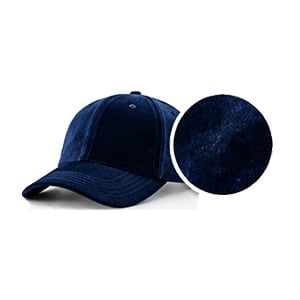
Faux suede is a polyester microfiber that copies the soft nap of real suede without any animal hide. Velvet has a dense, soft pile that catches the light, and most modern velvet uses polyester or rayon.
- Best for: fashion caps, berets, winter caps, and hat trims.
- Pros: a luxe look, plus lower cost and better stain resistance than real suede.
- Cons: low breathability, and the pile shows crush marks.
Weather Resistant Hat Fabrics
Some fabrics exist mainly to keep rain and wind out. These two show up most often in outdoor caps.
18. Waxed Cotton
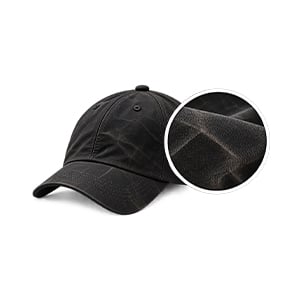
Waxed cotton is cotton cloth that makers treat with wax, so rain beads up and rolls off. It grew out of the oiled sailcloth that British sailors used in the 1800s. Spot clean it with cold water, because heat and detergent strip the wax away.
- Best for: outdoor flat caps, field caps, and bucket hats.
- Pros: blocks wind and develops a rugged patina over time.
- Cons: breathes less than plain cotton and needs rewaxing now and then.
19. Gore-Tex
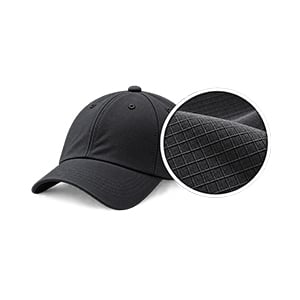
Gore-Tex is a waterproof membrane full of tiny pores. The pores block raindrops but still let sweat vapor escape. W. L. Gore & Associates discovered the membrane material in 1969 and launched Gore-Tex fabric in 1976.
- Best for: rain caps, hiking hats, and technical outdoor hats.
- Pros: keeps you dry in heavy rain and stops wind.
- Cons: costs more and looks technical rather than casual.
Best Fabric for Each Hat Type
| Hat Type | Best Fabrics | Why It Works |
| Baseball cap | Cotton twill, polyester twill, blends | A structured front holds its shape and shows logos clearly |
| Dad hat | Washed cotton, brushed cotton | Soft, unstructured, and relaxed |
| Trucker hat | Cotton and poly front with a poly mesh back | A logo surface up front and airflow behind |
| Snapback | Cotton twill, wool and acrylic blends | A firm crown and flat brim keep a bold shape |
| Stretch fit cap | Polyester, cotton and spandex blend | Stretches to fit without a closure |
| Bucket hat | Cotton, canvas, denim, nylon | Packable, washable, and easy to wear |
| Beanie | Acrylic, wool, cashmere | Stretchy knits that trap heat |
| Fedora | Wool felt, fur felt, toquilla or Milan straw | Holds a sharp crease in the crown |
| Cowboy hat | Fur felt, wool felt, Shantung or palm straw | Strong shape and wide shade |
| Sun hat | Straw, cotton, UPF-rated polyester | Shade and airflow on hot days |
| Top hat | Fur felt, wool felt, silk plush in vintage hats | Supports a tall, rigid crown |
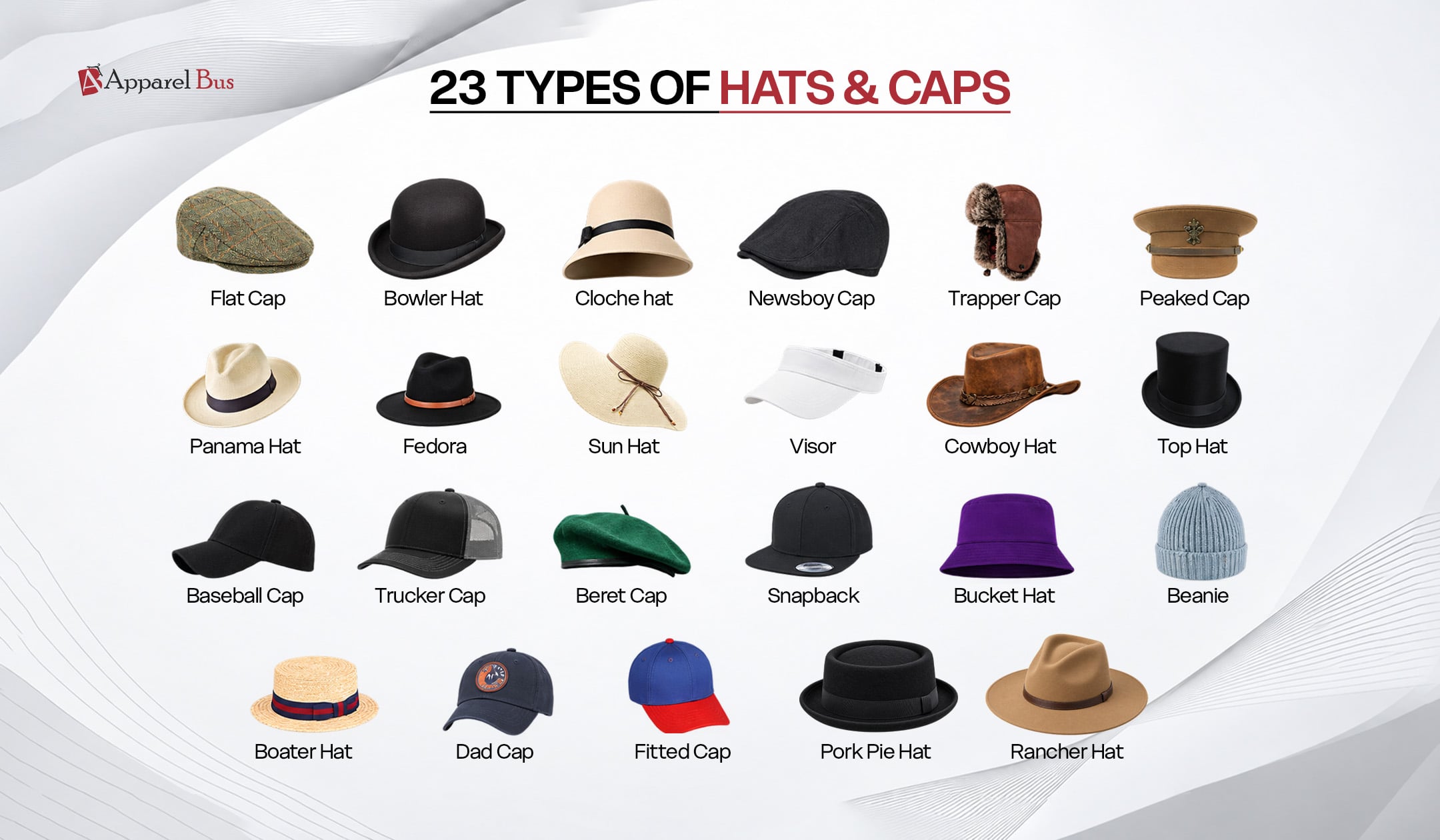
Different hat styles work better with certain fabrics. If you want to explore hat styles in more detail, see our guide to the Types of Hats, or read Trucker Hat vs Baseball Cap for a closer look at the difference between the two.
Best Hat Fabric for Every Season and Climate
Hot and humid weather: Choose linen, poly mesh, performance polyester, or an open straw weave. These fabrics let heat escape and dry quickly. Skip heavy wool and plain nylon.
- Hot, dry sun: A wide-brim straw hat or a cap in UPF-rated polyester protects your face and neck. Light colors reflect more heat than dark ones.
- Cold weather: Wool, cashmere and acrylic beanies hold heat best. Wool felt hats and corduroy caps also work well when the air turns crisp.
- Rain and wind: Waxed cotton, Gore-Tex, nylon and fur felt all shed water. Avoid paper straw and suede, because both can stain or lose shape when wet.
Choosing the Right Hat Fabric
The right hat fabric comes down to three questions: where will you wear it, what style do you want, and will you add a logo? Answer those, and the tables in this guide will point you to the right material in seconds. Ready to start? Explore our blank apparel collection and pick the base for your next design.
Share this Media
Leave us a comment