
 +1-442-325-3923




 Live Chat







Your shopping cart is currently empty.
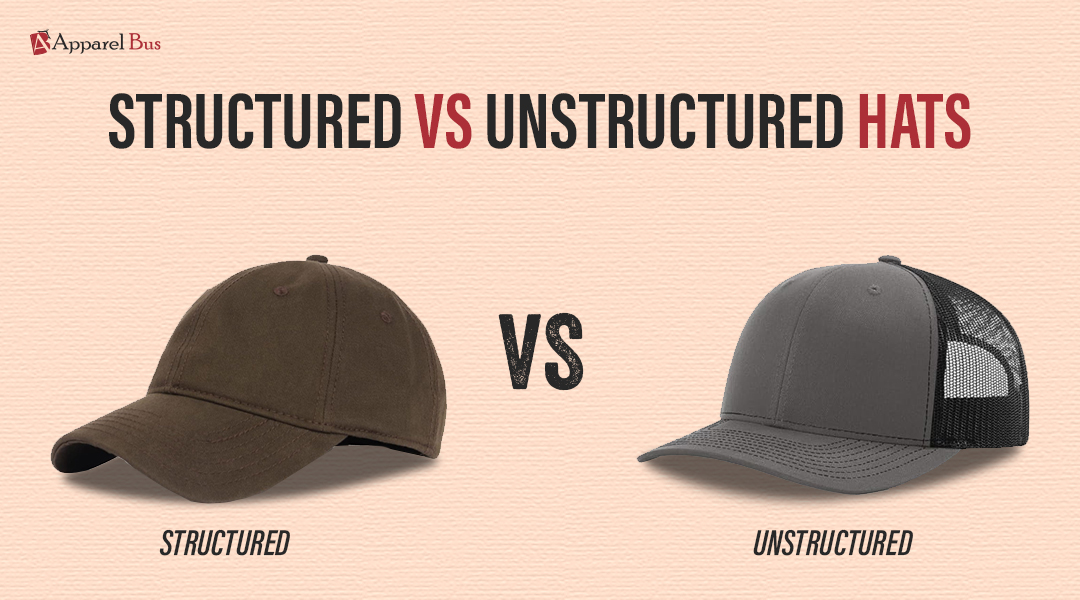
Table of Contents
Share this Media




Published on 16 Dec 2025

By Apparelbus
Structured vs Unstructured Hats: What’s the Real Difference?
Did you know unstructured hats were first worn by fishermen in the 1800s? They needed something soft and easy to fold, nothing stiff or fancy, just a hat that worked for long days on the water.
Today, that simple difference, structured vs. unstructured, still matters, especially if you’re choosing a hat for comfort, style, or branding. A structured hat has a firm shape. It usually uses stiff fabric in the front, like buckram, to help it stand tall. These are the hats you often see with bold logos, like snapbacks or team caps.
An unstructured hat is more relaxed. It doesn’t hold shape on its own and fits closer to your head. It’s the kind of hat you can toss in a bag or wear every day without thinking much about it. Let’s look at what really sets these two styles apart, and when one might work better than the other.
What "Structured" Really Means
A structured hat keeps its shape whether it’s on your head or sitting on a shelf. It stands tall, holds its form, and gives a sharp, clean look.
Anatomy Breakdown
The front two panels include buckram, a firm fabric that reinforces the crown. These hats usually come with:
- Buckram backing inside the front panels
- Reinforced seams
- Firm crown structure
- A sturdy sweatband for added support
Some brands have started using recycled buckram, offering the same strength with a lower environmental impact.
Pros of Structured Hats
- Keeps its shape all day
- Looks professional and polished
- Works well for logos or embroidery
- Great for high-visibility situations
Cons of Structured Hats
- Feels less flexible
- Traps more heat
- Doesn’t pack easily
Where You’ll See Them
You’ll spot structured hats on sports teams, branded uniforms, and promo merch. As one milliner put it, “Structured hats command authority.” That pretty much says it all.
Popular Structured Styles
- Yupoong 6089 – A 6-panel snapback with a tall, firm crown—great for bold logos
- Flexfit 5001 – Cotton twill cap with stretch for a snug fit
- Port Authority C608 – Easy-care fabric that’s ideal for workwear or uniforms
- Port & Company C914 – Affordable and clean-cut for everyday branding
What "Unstructured" Brings to the Table
Unstructured hats ditch the stiff front panels. They fold down when you're not wearing them and mold to your head when you are. Laid-back and easy to wear, they’re often the go-to choice for all-day comfort.
Anatomy Breakdown
These hats come with:
- No buckram or stiff backing
- Soft, flexible crown
- Lightweight materials like cotton or washed canvas
- A lower-profile silhouette
Pros of Unstructured Hats
- Extremely comfortable
- Breathes better in warm weather
- Packs easily in a bag or pocket
- Has a lived-in, casual feel
Cons of Unstructured Hats
- Doesn’t hold shape when not worn
- Less space for bold logos or branding
- May not fit formal or uniform dress codes
Use Cases
These hats work best for casual wear, travel, outdoor events, and lifestyle brands. According to studies, most hat-wearers prefer unstructured styles for daily comfort, and that tracks with how often you see them on the street.
Popular Unstructured Styles
- Big Accessories BX001 – Soft cotton cap with a relaxed shape for everyday wear
- Yupoong 6506 – A retro trucker hat with an unstructured front and breathable mesh
- Slouchy beanies and classic dad hats – Perfect for that casual, worn-in look
You can explore these options under curved brim hats and flat bill hats, too.
Key Differences Between Structured and Unstructured Hats
Here’s how these two styles really compare:
A. Shape & Structure
- Structured: The crown stands tall, even off your head.
- Unstructured: The crown sinks in and molds to your head’s shape.
B. Comfort & Fit
- Structured: Fits securely but may feel firmer.
- Unstructured: Offers a more relaxed, head-hugging fit right away.
C. Durability & Care
- Structured: Holds shape longer but needs gentle care. Use a hat form when drying.
- Unstructured: Easier to clean and reshape, though the crown softens with use.
D. Price & Value Comparison
- Structured: hats may cost more due to extra materials and labor.
- Unstructured: hats often use simpler construction, making them budget-friendly.
Material & Sustainability
Both structured and unstructured hats often use the same base fabrics such as cotton twill, polyester, mesh, or blends. But the way these materials are used and how much waste they create can vary a lot between the two styles.
Structured Hats
Structured styles typically include buckram, a stiff fabric sewn into the front panels to help the crown hold its shape. Most buckram is made from synthetic fibers, which aren’t exactly great for the planet. But that’s starting to change.
- Some brands now use recycled buckram, made from post-consumer plastics or reclaimed textiles. Same structure, smaller footprint.
- Others have switched to organic cotton shells and low-impact dyes, which reduce chemical runoff and energy use during production.
These small changes add up, especially when purchasing wholesale hats in bulk or for custom branding.
Unstructured Hats
With no stiff inserts or rigid shaping, unstructured hats naturally use fewer materials. That simpler construction makes them a cleaner choice from the start.
- Fewer synthetic parts
- Less energy is used during manufacturing
- Fewer steps in production overall
Most unstructured styles lean into natural fabrics like washed cotton, organic canvas, or recycled cotton blends. That keeps them light, breathable, and better for the environment, without sacrificing comfort or style.
What to Look For
If sustainability matters to you, check labels and product descriptions. Look for terms like:
- Recycled polyester mesh – breathable without new plastic
- Organic cotton twill – soft and grown with fewer chemicals
- Low-impact or plant-based dyes – better for waterways and skin
- Recycled interlinings – especially in structured caps
Care & Maintenance Tips
Structured Hats:
- Spot-clean with mild soap
- Air dry on a hat stand or upside down
- Store on a shelf or hook to keep its shape
Unstructured Hats:
- Hand-wash or use a gentle cycle
- Pat dry with a towel and reshape
- Fold or hang when not in use
FAQs & Myth-Busting
Can I turn an unstructured hat into a structured one?
Not quite. The structure comes from built-in materials like buckram, which is part of how the hat is made from the start.
Do structured hats feel hotter?
Yes, especially in warm weather. The stiff panels don’t let as much air through.
Which one lasts longer?
Structured hats hold their shape longer, but with the right care, either style can last for years.
Summary of Key Findings & Takeaways
| Priority | Recommended Style | Example Product |
| Shape & Crisp Silhouette | Structured Hat | Yupoong 6089, Flexfit 5001 |
| Comfort & Packability | Unstructured Hat | BX001, Yupoong 6506 |
| Balanced Performance | Mid-Profile Structured Cap | Port Authority C608 |
If you care about shape and polish, a structured hat is your best bet. If you want relaxed comfort and flexibility, unstructured is the way to go. Somewhere in between? Try a mid-profile cap that gives you a little bit of both.
Frequently Asked Questions
The main difference is how well the cap holds its shape during customization. Structured caps have reinforced front panels that create a firm, stable surface for embroidery, patches, and logos. This helps designs appear more prominent and maintain a professional look. Unstructured caps have a softer crown without internal support. While they can still be decorated with embroidery and other methods, the design may follow the natural contours of the fabric, creating a more relaxed and casual appearance.
Most trucker hats are structured. They typically feature a reinforced front panel and a high-profile crown that helps the hat maintain its shape. The mesh back panels provide ventilation, while the structured front offers an excellent surface for custom logos and embroidery. However, some manufacturers produce unstructured trucker hats for a softer fit, though structured versions remain the most common style.
Dad hats are usually unstructured. They feature a soft crown without stiff front panels, which gives them their relaxed, low-profile appearance. This comfortable fit is one of the main reasons dad hats remain popular for casual and everyday wear. Although most dad hats are unstructured, some modern variations include light structure while still maintaining a similar casual look.
Structured hats are generally considered the best choice for custom embroidery because the reinforced front panels provide a smooth and stable surface for detailed designs. Popular options include structured trucker hats, snapbacks, and fitted caps. Unstructured hats such as dad hats can also be embroidered successfully. The best choice depends on the look you want to achieve. Structured caps create a bold, professional appearance, while unstructured caps offer a softer, more relaxed style.
Unstructured hats are usually easier to pack for travel because their soft construction allows them to fold or compress more easily without losing their shape. Dad hats and other unstructured caps fit conveniently into luggage, backpacks, and carry-on bags. Structured hats require more care during packing because the reinforced crown can become misshapen if crushed. If portability is a priority, many travelers prefer unstructured cap styles.
Share this Media
Leave us a comment